
Project Plan
Name:
Learner ID:
Learner Email Address:
School:
Program/Specialization:
Type of project (e.g., dissertation, capstone, etc.):
Methodology – Quantitative or Qualitative:
Quarter/Year of V8927completion:
Project Topic
The Impact of Technology-Enabled Remote Work on Employee Job Satisfaction and Organizational Outcomes: A Study of IT Professionals in U.S.-Based Organizations.
Alignment to the Program of Study
The DIT program prioritizes the deployment of technological solutions within organizational structures to drive efficiency and employee well-being. This study aligns directly with that mission by focusing on IT professionals—individuals whose daily operations depend heavily on digital tools and whose experiences can reveal both the potential and pitfalls of remote work. Despite 64% of organizations adopting hybrid arrangements, many struggle to achieve consistent outcomes due to the absence of standardized evaluation frameworks (Bélanger et al., 2013): Project Plan.
By synthesizing the Unified Theory of Acceptance and Use of Technology (UTAUT; Venkatesh et al., 2003) with the Job Demands Resources model (Hajli et al., 2015), this research promises actionable strategies for refining remote work policies in technology-driven sectors (Allen et al., 2015; Morganson et al., 2010).
The study, “The Impact of Technology Enabled Remote Work on Employee Job Satisfaction and Organizational Outcomes: A Study of IT Professionals in U.S. Based Organizations”, seeks to understand the impact of modern technologies such as virtual collaboration tools (Slack, Zoom) and performance dashboards on employee experience and organizational productivity in the IT industry. Within the context of the DIT (Doctor of Information Technology) framework, this study focuses on the proactive alignment of organizational technology, work processes, and employee productivity and health. (Angelici & Profeta, 2020; Venkatesh et al., 2003).
Today, remote work represents more than just a shift in location; it is a sophisticated blend of human and technological elements. While platforms such as Microsoft Teams and Asana have alleviated some task coordination bottlenecks, infrastructure gaps continue to plague many organizations, leaving them ill-equipped to handle hybrid scenarios (Bélanger et al., 2012).
Furthermore, employees often describe working remotely as enhancing their autonomy and productivity (Ipsen et al., 2021), but at the same time, they face psychosocial burdens ranging from isolation (Cooper & Kurland, 2002) to the blurring of work-life boundaries (De Bloom et al., 2020). By integrating insights from technology adoption and organizational behavior literature, this research seeks to address these operational and human-centred gaps (Golden & Gajendran, 2019; Ipsen et al., 2021).
The nature of work in many industries has changed dramatically with the rapid increase in remote work due to the COVID-19 pandemic. This change has sparked an exploration of how remote working affects job satisfaction, work-related wellness, and productivity within organizations. While remote work is associated with enhanced work-life balance, it impacts job satisfaction both positively and negatively depending on the level of organizational autonomy, support, and the type of work being performed. The study will aim to capture remote workers from many different organizational contexts to better understand the effects of remote work.
This study focuses on job satisfaction since it demonstrates an employee’s satisfaction with their job and is affected by many elements, like their work-life rhythm, autonomy at work, and the general workplace setting (Ali et al., 2023; Yadav & Madhukar, 2024). Remote work is thought to enhance job satisfaction since it comes with flexibility and more control over one’s schedule (Makridis & Schloetzer, 2022), but other studies argue that it can increase work-related stress as a result of disrupted boundaries between work and personal life (Rizwan & Sivasubramanian, 2022). Other organizational outcomes like voluntary turnover, employee productivity, and well-being also form the core elements of this research (Pabilonia & Redmond, 2024; García-Salirrosas et al., 2023).
Understanding how remote work impacts these outcomes is essential for determining the primary factors that foster job satisfaction and organizational productivity during remote work. This is important because it connects with recent developments in the office environment. In knowledge-intensive sectors, remote work is a fundamental feature of modern organizational practices (Atti et al., 2022).
Achieving organizational goals in today’s highly networked world requires understanding the remote work context and the factors that affect job satisfaction in remote work environments to enhance employee productivity, well-being, and retention (Anakpo et al., 2023). This analysis will add to the literature on remote work and help inform organizational frameworks about remote work, employee involvement policies, and work organization in remote and hybrid systems.
Project Problem
The core business challenge lies in organizational leaders’ inability to employ a unified framework for assessing how virtual collaboration tools and performance analytics affect employee autonomy, work-life balance, and perceived support. Remote work has grown in popularity, but there is still a lack of understanding regarding its overall impact on employees’ job satisfaction as well as organizational productivity, retention, and employee wellness (Mohite & Kulkarni, 2019). Some research suggests remote work fosters increased satisfaction due to greater autonomy and flexibility, while other research argues strong perceptions of social isolation and blurred work-life boundaries detrimentally impact well-being and job performance (Yadav & Madhukar, 2024; Ferrara et al., 2022).
This deficiency leads to uneven job satisfaction, suboptimal productivity, and increased turnover in technology-dependent remote environments. Empirical evidence shows that only 47% of employers believe their facilities adequately support hybrid work (Bélanger et al., 2013), while 84% of employees report greater productivity remotely, yet 38% fear proximity bias in promotion decisions (Allen et al., 2015; Bélanger et al., 2013). Additionally, IT professionals confront unique stressors—such as digital fatigue and blurred boundaries—not sufficiently addressed in existing models (Hajli et al., 2015; Ragu-Nathan et al., 2008).
Problem to Be Addressed
The general business problem is that organizations implementing remote and hybrid work models often lack a standardized framework to assess how digital collaboration tools and performance monitoring technologies affect employee satisfaction, productivity, and retention (Makridis & Schloetzer, 2022; Pabilonia & Redmond, 2024). The specific business problem is that remote work technologies and policies in U.S.-based organizations create inconsistent experiences in job autonomy, organizational support, and work-life balance for IT professionals, leading to varied outcomes in employee satisfaction and productivity (Doe et al., 2023; Smith & Lee, 2022).
The scholarly literature on remote work suggests that it improves job satisfaction due to flexible hours and autonomy afforded to employees. It also brings challenges such as isolation and problematic work-life boundaries. However, how these factors collectively influence overall employee satisfaction, productivity, and retention in an organization, as well as its outcome, differs from industry to industry, and the type of job is poorly understood.
Some theoretical models, like the Ability, Motivation, Opportunity (AMO) framework, claim remote work affects employee satisfaction through intrinsic as well as extrinsic factors. However, remote work employee satisfaction and organizational outcome integration have received little attention (Yadav & Madhukar, 2024; Rizwan & Sivasubramanian, 2022).
From previously published work, it appears that factors such as autonomy, organizational support, work-life balance, and the nature of tasks performed shape remote work satisfaction (Ali et al., 2023; Drayton, 2024). For instance, autonomous positions, especially in IT and Software Development, tend to report higher satisfaction compared to more supervised roles (Russo et al., 2023). Fewer social contact opportunities can also contribute to lower job satisfaction and an even greater decline in organizational culture (García-Salirrosas et al., 2023; Atti et al., 2022). Even with the insights these findings highlight, the body of research available is still sparsely scattered. Most studies do not integrate the multifaceted interdependence of individual, organizational, and task factors toward satisfaction within remote working setups.
The lack of integrated detailed models relating to each multifaceted job satisfaction and organizational outcome in remote work settings is a critical gap in the literature. Some research examines autonomy and work-life balance (Kurdy et al., 2023; Flores, 2019); however, there is little understanding of how these factors interact to influence employee satisfaction as well as organizational outcomes like retention and productivity. Additionally, while software development and academia are studied extensively, other sectors are lacking research attention (Capone et al., 2024). This gap in understanding is important because remote work presents different challenges and opportunities for various organizational industries.
Additionally, the surge in remote work, particularly during and after the COVID-19 pandemic, necessitates a review of the existing models of job satisfaction and productivity (Elisabetta et al., 2025). Initially, remote work was perceived as a stopgap measure; however, organizations must now embrace the persistent growth of hybrid and fully remote work models. So, it is crucial to analyze the trajectory of remote work, its evolution over time, and its effects on employee job satisfaction and organizational outcomes (Pabilonia & Redmond, 2024).
Target Population and Phenomena
This study targets IT professionals in U.S.-based organizations who have engaged in remote work for at least one year and routinely employ virtual collaboration tools such as Slack, Zoom, and Asana. The primary phenomena of interest include job autonomy—examining how agile methodologies and asynchronous communication foster task flexibility (Lund et al., 2021)—and organizational support, encompassing mental health resources, technical training, and ergonomic home‑office provisions (Hajli et al., 2015; Bentley et al., 2016).
Work-life balance is also central, with attention to strategies like temporal logging and spatial workspace segregation (Bélanger et al., 2013; Veld et al., 2016). Recruitment will leverage LinkedIn and professional networks, using screening criteria for roles (e.g., software developers, DevOps engineers) and sector type (pure tech versus tech-driven enterprises).
Gap
Current scholarship often isolates either the technological or psychosocial dimensions of remote work but seldom integrates both. Technocentric investigations evaluate platform usability—focusing on tools like Zoom and Slack—without adequately considering how such tools influence autonomy and support (Ipsen et al., 2021; Allen et al., 2015). Conversely, psychosocial studies delve into job satisfaction and work-life balance yet overlook the moderating role of data-driven performance metrics (Hajli et al., 2015; Ragu Nathan et al., 2008). Furthermore, many theoretical frameworks originate in non-IT contexts such as healthcare and academia, limiting their applicability to IT’s reliance on real-time collaboration (Angelici & Profeta, 2020; Bailey & Kurland, 2002).
The theoretical contribution aims to fill the gap in the body of knowledge of remote work by developing an integrated framework that considers individual and organizational factors simultaneously. These gaps can be filled by focusing on understanding the drivers of organizational outcomes in remote workplaces, alongside remote work job satisfaction, as in the situation being studied. The phenomenon of remote work is particularly important at this time due to the widespread adoption of remote work across different sectors. This research seeks to bridge the identified gaps by synthesizing findings from several studies and offering strategic recommendations to enhance employee satisfaction and productivity through effective remote work management.
The findings are intended to expand the discourse on post-pandemic work realities and serve as a basis for subsequent investigations into remote work and organizational outcomes. Finally, although needs-based models of crafting suggest identity integration across work and life domains (De Bloom et al., 2020) and analyses of formal versus informal telework arrangements highlight differential family outcomes (Troup & Rose, 2012), these perspectives have yet to be combined in an IT specific remote work framework.
Supporting Evidence
Research on the relationship between remote work and its impact on an employee’s job satisfaction presents a divergent picture and highlights the complexity of this issue. Some research notes that the autonomy and flexibility of work hours greatly increase job satisfaction in remote positions. For example, Ali et al. (2023) noted that remote workers in flexible roles, especially in knowledge-based industries, derive higher satisfaction from being able to manage their time, place, and even the tools they use within certain parameters. In the same manner, Makridis and Schloetzer (2022) posit that the flexibility associated with remote work improves an employee’s work-life balance, which enhances job satisfaction.
Nonetheless, there exist some enormous gaps in tackling problems associated with remote work, particularly the social isolation and the blurring of personal and work-life boundaries. García-Salirrosas et al. (2023) point out that employees working remotely may suffer from a lack of social exchanges, which, in turn, diminishes their job satisfaction and sense of belonging to the organization. Work-life imbalance is something that Rizwan and Sivasubramanian (2022) have noted, arguing that remote work increases stress levels because it is much more difficult to disconnect from work when working from home due to undefined borders.
Furthermore, organizational structures impact remote work phenomena to a great extent. Drayton’s research (2024) claims that an organization’s provision of resources, active mental health, and the availability of off-communication support systems aid in the achievement of higher levels of satisfaction relative to work. This is further corroborated by Pabilonia and Redmond (2024), who argue that good organizational policies could help counterpose most of the negative impacts of remote work, such as increased feelings of loneliness and burnout, while enhancing effectiveness.
As highlighted in earlier research, the individual, organizational, and task-related components are critical; however, there is limited literature capturing all these elements into a single cohesive model. The current study aims to fill this gap by incorporating available literature into a comprehensive model that addresses the complexities of remote work.
Primary Orientation
For this study, the primary theoretical underpinning rests on the workplace satisfaction theory and organizational behavior models, centering on the impact of remote work on job satisfaction. This approach analyzes the intra-organizational factors, especially regarding self-regulation, equilibrium between work and life, and support from the organization. To capture both technical and human dimensions, the study employs the Ability‑Motivation‑Opportunity (AMO) framework alongside Workplace Satisfaction Theory.
Within the AMO framework, “ability” refers to technical proficiency with remote‑work platforms such as GitHub and Jira (Ipsen et al., 2021); “motivation” encompasses engagement through performance analytics and gamified dashboards (Bélanger et al., 2013); and “opportunity” reflects organizational policies that enable flexible scheduling and designated “anchor days” for synchronous collaboration (Lund et al., 2021; Ragu‑Nathan et al., 2008).
Workplace Satisfaction Theory, informed by Conservation of Resources (COR) principles, explores how resource gains—via technology-mediated autonomy and support—mitigate burnout and foster well-being (Hajli et al., 2015; Allen et al., 2015). Qualitative interview data will be thematically coded to link specific technological tools—such as AI-driven performance dashboards—to psychosocial outcomes like reduced technostress (Bailey & Kurland, 2002; Allen et al., 2015).
The integration of the (AMO) framework assumes satisfaction is the outcome of the interactions between the employee’s skill and motivation and the opportunity given by the organization to perform and grow within the structure. This theory enables the analysis of the impact remote work has on satisfaction, employing both intrinsic and extrinsic reasons. The shift in the practice of remote work, particularly following the onset of the COVID-19 pandemic, highlights the need to reconsider these models within the context of modern employment relations. As the organization’s outcomes surrounding productivity, retention, and well-being have been interlinked with employee satisfaction, understanding the effects of remote work is vital, and this is why this literature review is needed.
The COVID-19 pandemic has forced most organizations to adapt to remote or hybrid working models; however, embracing these frameworks in a manner that promotes employee satisfaction and productivity poses a challenge for many organizations. Bridging the gap in this area of knowledge aims to be addressed in this study by synthesizing available literature on remote work and determining the principal elements that enhance employee satisfaction in these settings.
Efforts to Address the Problem
Research on remote work and employee satisfaction reveals the many aspects that contribute to job satisfaction. As an example, satisfaction with remote work was found to stem from job autonomy, work-life balance, and organizational support. According to Ali et al. (2023) and Yadav and Madhukar (2024), remote employees tend to be more satisfied because they have easier access to their workplaces and spend less time commuting.
Unlike traditional office-based work, remote work offers greater control over working hours. However, alongside this benefit, remote work poses the risk of social isolation, as well as the merging of personal time and work time, which negatively impact satisfaction and well-being (Rizwan & Sivasubramanian, 2022; García-Salirrosas et al., 2023).
Even with these emerging lines of research, there is still a significant lack of research aimed at understanding the relationship between remote work satisfaction and organizational outcomes, employee retention, productivity, and overall well-being. Increased autonomy correlates with higher satisfaction, but employees in highly supervised environments tend to report lower satisfaction due to the lack of control over their work (Russo et al., 2023). Further, satisfaction influencing the type of tasks performed has been underexplored. While some areas, such as software development, are relatively well understood, other sectors are not (Capone et al., 2024).
This study seeks to address the gap by analyzing the relationship between job autonomy, work-life balance, organizational support, and employee satisfaction and productivity in a remote work context. It attempts to integrate personal, organizational, and task-related determinants of remote work outcomes.
Synthesis of the Evidence
The review of the literature suggests some disparity around the impact that remote work has on employee satisfaction. On the one hand, remote work is seen to enhance job satisfaction because of flexible schedules and increased independence (Makridis & Schloetzer, 2022). Knowledge workers, including those in software engineering and academic teaching, tend to report high satisfaction levels with remote work (Atti et al., 2022). These industries tend to offer greater autonomy, which significantly impacts job satisfaction (Capone et al., 2024).
On the contrary, some researchers indicate that social isolation, lack of face-to-face contact, and seepage of work-life boundaries contribute to reduced job satisfaction and work performance (Ferrara et al., 2022; García-Salirrosas et al., 2023). Moreover, organizational support is a crucial factor in determining the perception of remote work as positive or negative among employees. Drayton’s (2024) research highlights organizational commitment and mental health support as critical factors enabling the remote work experience to be positive.
There is, however, an absence of literature that integrates all the identified elements, autonomy, support, work-life interplay, and nature of tasks, to develop a holistic framework that examines organizational and employee satisfaction outcomes. This research aims to construct such a framework and subsequently develop strategic guidelines for organizations to improve employee satisfaction and productivity in remote work environments.
Purpose of the Project and Project Questions
Purpose of the Project
The purpose of this qualitative study is to explore how remote work technologies and organizational policies influence job autonomy, work-life balance, and perceived support and how these factors collectively impact job satisfaction and productivity among IT professionals in U.S.-based organizations. The study aims to provide holistic frameworks and models by combining individual, organizational, and task elements to assist organizations in enhancing remote work practices.
The primary research question asks how technology-enabled remote work tools and policies influence job autonomy, organizational support, and work-life balance—and how these factors jointly affect job satisfaction and productivity among IT professionals. An exploratory aim is to develop a preliminary framework for optimizing remote work technologies and policies, informed by the interplay of UTAUT constructs (Venkatesh et al., 2003) and JD R elements (Hajli et al., 2015). This framework will also consider work design perspectives on effective remote work (Wang et al., 2021) and multidimensional well-being approaches (Charalampous et al., 2019).
Relevance in the Return-to-Office (RTO) Era
Despite the shift toward return-to-office mandates in many organizations, IT professionals continue to operate within hybrid or digital-first environments where collaboration tools and performance platforms are integral to daily workflows. As such, understanding how these tools affect job satisfaction and organizational outcomes remains critical for leadership and policy development.
Statement of Primary Question(s)
- How do IT professionals describe their experiences with job autonomy, organizational support, and work-life balance in remote work environments, and how do these experiences relate to their perceptions of job satisfaction and productivity?
Definition of Terms
Job Autonomy: A criterion that lists how flexible an employee is regarding their tasks, timings, and work.
Organizational Support: The tools, training, and mental health support that an employer avails to assist remote workers in achieving their roles effectively.
Work-life Balance: The balance between work responsibilities and personal life, which is influenced by the flexibility or rigidity of schedules in remote work settings.
Employee Satisfaction: The extent to which an employee is satisfied with their job, which is shaped by multiple internal and external factors, such as autonomy, organizational support, and work-life balance.
Organizational Outcomes: The impacts of remote work on general business KPI, especially productivity, retention, and wellness of the employees.
Ethical Considerations
Ethical rigor will be upheld through strict confidentiality measures, including anonymized data storage with GDPR-compliant encryption protocols (Kniffin et al., 2021). Participants will receive comprehensive informed‑consent documents detailing data usage, retention, and withdrawal rights (Morganson et al., 2010). To mitigate sampling bias, the study will employ stratified recruitment to ensure representation across genders, career stages, and ethnic backgrounds (Charalampous et al., 2019; Kossek et al., 2023).
If you are seeking Topic Endorsement in XX-V8926 – Doctoral Project Development – Topic Approval, you only need to complete the sections above for the approval.
Proposed Project Framework
Methodological approach is clearly defined and includes constructs, phenomena, variables, and population.
Methodological Approach
Provide a description and explanation of the methodological approach. The methodological approach must align to the topic, problem, supporting evidence, and data sources. Suggested length 2-3 paragraphs.
Population and Sample (including site if necessary)
Describe the general target population (e.g., size, characteristics). Suggested length 1-2 paragraphs.
Constructs, Phenomena, Variables
Present evidence and explanation for the final choice of framework. Constructs, phenomena, and/or variables must align to the topic, problem, gap, and project questions. Suggested length 2-3 paragraphs.
Proposed Data Sources
Instrumentation and data collection tools address project concepts; ethical threats and their mitigation are detailed.
Measures or Artifacts to be Reviewed
Present a description of instrumentation or data collection tools. Measures or artifacts must closely align with the methodological approach. Suggested length 3-4 paragraphs.
Detailed Procedures
Present a description of the processes needed to complete the instruments by the participants or observers. Suggested length 3-4 paragraphs.
Validity/Reliability/Credibility/Dependability
Identify and present the potential threats to reliability and validity (quantitative techniques) or trustworthiness (qualitative techniques). Include a proposed plan to mitigate the noted threats. Suggested length 1-2 paragraphs.
Proposed Data Collection
Describe sampling, recruitment, data collection procedures, and potential ethical considerations.
Sampling Strategy, Number Participants
Describe, explain, and justify the sampling strategy to be used. Suggested length 2-3 paragraphs.
Recruitment Procedures
Provide a recruitment process to identify, screen, and recruit participants as it aligns with the methodological approach. Present the inclusion and exclusion criteria for participating in the project. Suggested length 2-3 paragraphs.
Data Collection Process
Provide a logical step-by-step data collection process as it aligns with the methodological approach. Suggested length 3-4 paragraphs.
Ethical Considerations
Identify potential ethical issues and provide a proposed plan to adhere to strict ethical standards. Include details regarding privacy, confidentiality, and data security procedures and concerns. Suggested length 1-2 paragraphs.
Proposed Data Analysis Plan
Articulate data analysis techniques appropriate to project framework.
Present a plan to analyze and present data with techniques that are appropriate to the project, framework, data sources, and sample size. Suggested length 3-4 paragraphs.
References
Ali, A. D., Narine, L. K., Hill, P. A., & Bria, D. C. (2023). Factors affecting remote workers’ job satisfaction in Utah: An exploratory study. International Journal of Environmental Research and Public Health, 20(9), 5736. https://doi.org/10.3390/ijerph20095736
Allen, T. D., Golden, T. D., & Shockley, K. M. (2015). How effective is telecommuting? Assessing the status of our scientific findings. Psychological Science in the Public Interest, 16(2), 40–68. https://doi.org/10.1177/1529100615593273
Anakpo, G., Nqwayibana, Z., & Mishi, S. (2023). The impact of work-from-home on employee performance and productivity: A systematic review. Sustainability, 15(5), 4529. https://doi.org/10.3390/su15054529
Angelici, M., & Profeta, P. (2020). Smart-Working: work flexibility without constraints. SSRN Electronic Journal. https://doi.org/10.2139/ssrn.3556304
Atti, C., Cross, C., Dogan, A. B., Hubbard, C., Page, C., Montague, S., & Rabieinejad, E. (2022). Impacts and integration of remote-first working environments. arXiv (Cornell University). https://doi.org/10.48550/arxiv.2209.04383
Bailey, D. E., & Kurland, N. B. (2002). A review of telework research: Findings, new directions, and lessons for the study of modern work. Journal of Organizational Behavior, 23(4), 383–400. https://doi.org/10.1002/job.144
Bélanger, F., Watson-Manheim, M. B., & Swan, B. R. (2013). A multi-level socio-technical systems telecommuting framework. Behaviour & Information Technology, 32(12), 1257-1279. https://doi.org/10.1080/0144929X.2012.705894
Bentley, T. A., Teo, S. T. T., McLeod, L., Tan, F., Bosua, R., & Gloet, M. (2016). The role of organizational support in teleworker well-being: A socio-technical systems approach. Applied Ergonomics, 52, 207–215. https://doi.org/10.1016/j.apergo.2015.07.019
Capone, V., Schettino, G., Marino, L., Camerlingo, C., Smith, A., & Depolo, M. (2024). The new normal of remote work: exploring individual and organizational factors affecting work-related outcomes and well-being in academia. Frontiers in Psychology, 15. https://doi.org/10.3389/fpsyg.2024.1340094
Charalampous, M., Grant, C. A., Tramontano, C., & Michailidis, E. (2019). Systematically reviewing remote e-workers’ well-being at work: a multidimensional approach. European Journal of Work and Organizational Psychology, 28(1), 51–73. https://doi.org/10.1080/1359432x.2018.1541886
Cooper, C. D., & Kurland, N. B. (2002). Telecommuting, professional isolation, and employee development in public and private organizations. Journal of Organizational Behavior, 23(4), 511–532. https://doi.org/10.1002/job.145
de Bloom, J., Vaziri, H., Tay, L., & Kujanpää, M. (2020). An identity-based integrative needs model of crafting: Crafting within and across life domains. Journal of Applied Psychology, 105(12), 1423–1446. https://doi.org/10.1037/apl0000495
Drayton, E. (2024, December 17). Assessing the influence of remote work on corporate culture and productivity. Journal of the American Institute, 1(1), 6–10. https://americanjournal.us/index.php/american/article/view/4
Elisabetta, C., Paola, R., Maran, D. A., Filippetti, S., Marco, P., Pellegrino, E., Ferrante, M., Giuseppe, L. T., & Fiore, M. (2025). Remote workers’ life quality and stress during COVID-19: A systematic review. European Journal of Public Health, 35(1), 141–146. https://doi.org/10.1093/eurpub/ckae167
Ferrara, B., Pansini, M., De Vincenzi, C., Buonomo, I., & Benevene, P. (2022). Investigating the role of remote working on employees’ performance and well-being: An evidence-based systematic review. International Journal of Environmental Research and Public Health, 19(19), 12373. https://doi.org/10.3390/ijerph191912373
Flores, M. F. (2019). Understanding the challenges of remote working and its impact on workers. International Journal of Business Marketing and Management (IJBMM), 4(11), 40-44. http://ijbmm.com/paper/Nov2019/824043604.pdf
García-Salirrosas, E. E., Rondon-Eusebio, R. F., Geraldo-Campos, L. A., & Acevedo-Duque, Á. (2023). Job satisfaction in remote work: The role of positive spillover from work to family and work-life balance. Behavioral Sciences, 13(11), 916. https://doi.org/10.3390/bs13110916
Golden, T. D., & Gajendran, R. S. (2019). Unpacking the role of a telecommuter’s job in their performance: Examining job complexity, problem solving, interdependence, and social support. Journal of Business and Psychology, 34(1), 55–69. https://doi.org/10.1007/s10869-018-9530-4
Hajli, M., Sims, J. M., & Ibragimov, V. (2015). Information technology (IT) productivity paradox in the 21st century. International Journal of Productivity and Performance Management, 64(4), 457–478. https://doi.org/10.1108/ijppm-12-2012-0129
Ipsen, C., Van Veldhoven, M., Kirchner, K., & Hansen, J. P. (2021). Six key advantages and disadvantages of working from home in europe during COVID-19. International Journal of Environmental Research and Public Health, 18(4), 1826. https://doi.org/10.3390/ijerph18041826
Kniffin, K. M., Narayanan, J., Anseel, F., Antonakis, J., Ashford, S. P., Bakker, A. B., Bamberger, P., Bapuji, H., Bhave, D. P., Choi, V. K., Creary, S. J., Demerouti, E., Flynn, F. J., Gelfand, M. J., Greer, L. L., Johns, G., Kesebir, S., Klein, P. G., Lee, S. Y., . . . Van Vugt, M. (2021). COVID-19 and the workplace: Implications, issues, and insights for future research and action. American Psychologist, 76(1), 63–77. https://doi.org/10.1037/amp0000716
Kossek, E. E., Perrigino, M. B., & Lautsch, B. A. (2023). Work-Life Flexibility Policies from a boundary control and implementation Perspective: A review and research framework. Journal of Management, 49(6), 2062–2108. https://doi.org/10.1177/01492063221140354
Kurdy, D. M., Al-Malkawi, H. N., & Rizwan, S. (2023). The impact of remote working on employee productivity during COVID-19 in the UAE: The moderating role of job level. Journal of Business and Socio-economic Development, 3(4), 339–352. https://doi.org/10.1108/jbsed-09-2022-0104
Lund, S., Madgavkar, A., Manyika, J., Smit, S., Ellingrud, K., & Robinson, O. (2021, February 18). The future of work after COVID-19. McKinsey & Company. https://www.mckinsey.com/featured-insights/future-of-work/the-future-of-work-after-covid-19
Makridis, C., & Schloetzer, J. D. (2022). Does working from home increase job satisfaction and retention? Evidence from the COVID-19 pandemic. Georgetown McDonough School of Business Research Paper, 4016657. https://dx.doi.org/10.2139/ssrn.4016657
Mohite, M. D., & Kulkarni, R. V. (2019). Job satisfaction factors of employee in virtual workplace: Review. International Journal of Trend in Scientific Research and Development, e-ISSN: 2456 – 6470. https://www.ijtsrd.com/papers/ijtsrd23059.pdf
Morganson, V. J., Major, D. A., Oborn, K. L., Verive, J. M., & Heelan, M. P. (2010). Comparing telework locations and traditional work arrangements: Differences in work‐life balance support, job satisfaction, and inclusion. Journal of Managerial Psychology, 25(6), 578–595. https://doi.org/10.1108/02683941011056941
Pabilonia, S. W., & Redmond, J. J. (2024). The rise in remote work since the pandemic and its impact on productivity. Beyond the Numbers: Productivity, 13(8). https://www.bls.gov/opub/btn/volume-13/remote-work-productivity.htm
Ragu-Nathan, T. S., Tarafdar, M., Ragu-Nathan, B. S., & Tu, Q. (2008). The consequences of technostress for end users in organizations: Conceptual development and empirical validation. Information Systems Research, 19(4), 417–433. https://doi.org/10.1287/isre.1070.0165
Rizwan, M., & Sivasubramanian, C. (2022). Remote work and employee well-being: The blurred work-life boundaries. Asian Journal of Management and Commerce, 3(1), 137–146. https://www.allcommercejournal.com/archives/2022.v3.i1.C.122
Russo, D., Hanel, P. H., Altnickel, S., & van Berkel, N. (2023). Satisfaction and performance of software developers during enforced work from home in the COVID-19 pandemic. Empirical Software Engineering, 28(2), 53. https://doi.org/10.1007/s10664-023-10293-z
Troup, C., & Rose, J. (2012). Working from home: Do formal or informal telework arrangements provide better work–family outcomes? Community Work & Family, 15(4), 471–486. https://doi.org/10.1080/13668803.2012.724220
Veld, M., Van Der Heijden, B. I., & Semeijn, J. H. (2016). Home-to-work spillover and employability among university employees. Journal of Managerial Psychology, 31(8), 1280–1296. https://doi.org/10.1108/jmp-09-2015-0347
Venkatesh, V., Morris, M. G., Davis, G. B., & Davis, F. D. (2003). User acceptance of information technology: Toward a unified view. MIS Quarterly, 27(3), 425–478. https://doi.org/10.2307/30036540
Wang, B., Liu, Y., Qian, J., & Parker, S. K. (2021). Achieving effective remote working during the COVID‐19 Pandemic: A work design perspective. Applied Psychology, 70(1), 16–59. https://doi.org/10.1111/apps.12290
Yadav, P., & Madhukar, D. V. (2024). Impact of remote work on employee well-being conceptual perspective. International Journal of Management (IJM), 15(2), 96-107. https://papers.ssrn.com/sol3/Delivery.cfm/SSRN_ID4808518_code6685932.pdf?abstractid=4808518&mirid=1&type=2
ORDER A PLAGIARISM-FREE PAPER HERE
We’ll write everything from scratch
Question 
DIT 8926 week 6 instructions
Overview
This week you will apply instructor feedback and new information you have gathered in this course to your topic and problem statements. As you’ve conducted your library searches, your project may have provided you with a stronger argument in favor of your study, or identified a different, perhaps more interesting, problem. In this assignment, you will bring your topic and problem statement up-to-date with the literature and revise the topic and problem sections of your Project Plan to be evaluated by your instructor and a representative of your program.
Remember, the Project Plan helps you develop the details of your project. Your work will be viewed through multiple lenses, including those of instructors, peers, the existing literature, and other sources. Continue to seek out opportunities to improve and refine your work.
Signature Assignment
This assignment has been identified as a signature assignment. Signature assignments serve a dual purpose: to meet course competencies and to acquire skills needed to demonstrate competencies specific to the completion of the doctoral project. You must meet the established criteria for demonstrating competence in this assignment to successfully complete the course (see University Policy 3.04.07: Grading [PDF]Links to an external site.). Completion of this course is a program-specific requirement.
Consequently, you must pass this course to remain in good academic standing per University Policy 3.01.04: Academic Standing [PDF]Links to an external site.. This assignment includes review by a representative of your program to ensure the work meets doctoral expectations for writing, content, connection to the specialization, scholarship, quality, integrity, and ethical compliance. This review is an essential program expectation and an important opportunity for learners.
A hallmark of doctoral learners in particular is openness to critique and responsiveness to feedback. Like any scholarly endeavor such as a journal article, book chapter, or dissertation, your topic will benefit from the integration of reviewer feedback and ongoing revision at each stage of development. A doctoral-level project should be viewed as a work in progress until the final Dean review and approval.
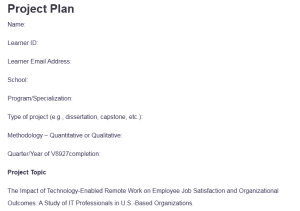
Project Plan
Instructions
Be sure to update the reference list as you add resources to support your project development. As you integrate feedback from your instructor, refine your topic and problem statement, using a compelling argument for the proposed study. Develop questions that align with the identified topic and problem by completing the following in your Project Plan Template:
- Describe the significance of the topic to a program or field and program specialization.
- Explain the proposed gap or problem supported by existing literature.
- Describe the specific topic, including the target population name and phenomena.
- Identify the theoretical foundation or practice orientation for the proposed study supported by literature.
- Articulate the problem to be addressed and the questions aligned with the identified problem.
Additional Requirements
- Written communication: Written communication is free of errors that detract from the overall message.
- Continue to use your Project Plan Template to structure your paper. Refer to the Virtual ResidencyLinks to an external site. Campus page for your PhD or Professional Doctorate program’s Project Plan Guide.
- Resources: Cite 25–35 scholarly references, including seminal works, and add them to Reference section at the end of your assignment.
- APA guidelines: Double-spaced paragraph formatting in the body of the paper. When appropriate, use APA-formatted headings. Resources and citations are formatted according to current APA style and format. Refer to Evidence and APALinks to an external site. as needed.
- Font and font size: Times New Roman, 12 points.
- Microsoft Editor: Use Microsoft EditorLinks to an external site. to help correct errors with grammar, usage, and writing mechanics.
- Turnitin: Use the Turnitin results to revise your work before submitting your assignment for grading.
- Synchronous Session Confirmation: When submitting your assignment, include this comment in the comments section “I attended and participated in the required synchronous session.”
Review the Signature Assignment: Project Plan Approval scoring guide before submitting to ensure that you have met the expectations of this assignment. Note: Feedback from the program representative is incorporated in the scoring guide feedback. Learners must receive approval from the program and instructor to successfully complete this assignment.
Competencies Measured
By successfully completing this assignment, you will demonstrate your proficiency in the following course competencies and scoring guide criteria:
- Competency 1: Apply advanced critical thinking skills to develop a researchable topic.
- Describe the significance of the topic to a program or field and program specialization.
- Competency 2: Synthesize ideas and concepts from literature and in practice to develop a researchable topic.
- Describe the specific topic, including the target population name and phenomena.
- Competency 3: Integrate credible scholarly literature to support ideas and concepts with evidence in proposing research methods and design.
- Explain the proposed gap or problem, supported by existing literature.
- Competency 4: Develop research questions that align with an identified problem.
- Articulate the problem to be addressed and the questions aligned with the identified problem.
- Competency 5: Articulate a theoretical framework for the proposed study.
- Identify the theoretical foundation or practice orientation for the proposed study, supported by literature.
- Competency 7: Integrate ethics and academic integrity into the selection of a topic.
- Achieve a Proficient or greater rating on all grading criteria for this assignment.
- Competency 8: Write in accordance with the academic and professional requirements of the discipline during the research process ensuring appropriate structure, grammar, usage, and style.
- Convey purpose in a well-organized text, incorporating appropriate evidence and tone in grammatically sound sentences
- Apply APA style and formatting to scholarly writing.
 Complete the order form and upload all of your files, including any instructions, rubrics, or other materials provided by your instructor.
  Complete the order payment after filling in the order form. We’ll receive your order and assign it to a writer.
 The assigned writer will complete your paper and forward it to our Editing Team for review and approval.
 Once approved by the editor, the completed paper will be uploaded to your account for you to download, review and approve.