
DNP Role Analysis
The role of a Doctor of Nursing Practice (DNP)-prepared Psychiatric-Mental Health Nurse Practitioner (PMHNP) is essential in addressing gaps in mental healthcare, advocating for policy changes, and integrating advanced clinical practices. The previous DNP Role Analysis Part 1 was aimed at providing an analysis in terms of the SWOT Analysis, within which one should outline this role’s strengths, weaknesses, opportunities, and threats. The participants’ beliefs were highlighted with regard to their ability to engage with and drive systemic changes, advocate for policy changes, and encourage the adoption of evidence-based practice in psychiatric nursing practice among PMHNPs: DNP Role Analysis.
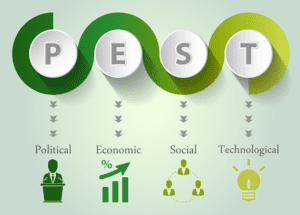
This paper extends Part 1 by conducting a PEST analysis in order to identify the political, economic, social and technological factors acting on the DNP-prepared PMHNP role. Moreover, this paper also encompasses the recommendations of the implementation plan, identification of stakeholder support to perform this role, funding for this role, a theoretical framework for practice and a model to measure the effectiveness of this role in the mental health industry.
PEST Analysis of the DNP-Prepared PMHNP Role
The PEST analysis provides insight into external factors that influence the advancement and effectiveness of DNP-prepared PMHNPs.
Political Factors
These scopes of practice indicate that the role of DNP-prepared PMHNPs is contingent on the specific state and federal laws in every state. In Full Practice Authority (FPA) states, PMHNPs can assess, diagnose, and treat patients to address the shortage of mental health care, especially in areas that have little access. Still, restrictive states allow some level of control from physicians, so the freedom to practice independently is limited (Hajizadeh et al., 2021).
Additionally, Medicaid and Medicare reimbursement policies create financial barriers, as PMHNP services are often reimbursed at lower rates than psychiatrists, discouraging independent practice (Oh et al., 2022). Although the Mental Health Parity and Addiction Equity Act (MHPAEA) mandates insurance coverage for mental health services, inconsistent enforcement limits its effectiveness (Oh et al., 2022). Advocacy by nursing organizations like ANA and APNA is crucial in expanding policy support for PMHNP autonomy and fair reimbursement, ensuring DNP-prepared nurses play a larger role in addressing the mental health crisis.
Economic Factors
Economic constraints significantly impact the role of DNP-prepared PMHNPs, particularly in funding and reimbursement. Several mental health services have not been adequately financed; therefore, the development of more advanced DNP-led projects is constrained (Martsolf et al., 2023). Despite higher educational costs, DNP-prepared PMHNPs reduce overall healthcare expenditures by integrating cost-effective models such as telepsychiatry (Oh et al., 2022).
Finally, the advancement of virtual psychiatry services has reduced the cost of operation, as observed by Martsolf et al. (2023). However, insurance reimbursement policies with a series of conditions revolving around the physician supervision of the work done reduce the financial independence of DNP-prepared PMHNPs and their practice within mental health care facilities.
Social Factors
Social determinants play a crucial role in shaping the effectiveness of DNP-prepared PMHNPs in mental healthcare. Discrimination in mental health still discourages people from seeking treatment, hence DNP-led advocacy and raising awareness on mental disorders (Kirkbride et al., 2024). Consequently, many rural and minority populations have poor access to psychiatric care, making integrated care an essential role for DNP-PMHNPs (Kirkbride et al., 2024).
Patient populations have also become more diverse, and therefore, culturally sensitive mental health care is required where DNPs are well-placed to drive change (Martsolf et al., 2023). Moreover, mental health disorders such as depression, anxiety, substance use disorders, and others have become more widespread, which has led to the need for highly qualified psychiatric healthcare professionals, so DNP-prepared PMHNPs can help to eliminate such disparities.
Technological Factors
Advancements in technology have significantly enhanced the role of DNP-prepared PMHNPs in mental healthcare. Telepsychiatry has become more prevalent since the COVID-19 outbreak, with the help of which DNPs can practice and deliver psychiatric services to particularly deprived populations (Schroeder, 2020). Also, informatics-knowledgeable DNPs can benefit from the use of electronic health records (EHR) and predictive analytics in the management of the disease to enhance treatment (Di Carlo et al., 2020).
In addition, AI and digital psychiatry are changing various areas of mental health care, including the patient’s engagement with an organisation and early diagnosis provided by an AI-assisted assessment and chatbot (Schroeder, 2020). Indeed, these innovations have put DNP-PMHNPs at the cutting edge of the healthcare services they provide today.
Implementation of the DNP-Prepared PMHNP Role
Stakeholder Support
The successful integration of DNP-prepared PMHNPs relies on strong stakeholder support. Healthcare organizations should appreciate their efficiency in providing high-quality psychiatric services. Stakeholders should encourage equal remuneration for services rendered with an emphasis on policymakers and insurance companies to enhance financial viability. Further, the involvement of community and patient associations ensures that policy reforms advocating for the improvement of mental health care accessibility are sustained.
Funding and Cost Considerations
Adequate funding and financial planning are crucial for implementing the DNP-prepared PMHNP role in mental healthcare. Grants from the government, like HRSA mental health workforce funding, offer funds for training and growth of the workforce. Private health system investment in digital psychiatry and telehealth can improve the delivery and availability of services.
Academic healthcare partnerships facilitate research, innovation, and education to support DNP training. In this regard, the cost savings in terms of reduced hospital readmissions, better control of ER psychiatric visits, and managed care expenses further confirm that the DNP-led interventions are financially feasible strategies for enhancing mental health and its affordability.
Theoretical Framework for Implementation
Lewin’s Change Theory provides a structured approach for integrating DNP-prepared PMHNPs into mental healthcare. In unfreezing, resistance is evaluated in the structures of conventional healthcare organisations. Transferring pilot implementation of interventions to DNP frontrunners would help support the implementation of such methods. Lastly, refreezing would provide information on the roles, institution policies, and long-term commitments necessary for maintaining DNP-PMHNP implementation.
Evaluation of Role Effectiveness
Assessing the impact of DNP-prepared PMHNPs requires measuring key clinical and financial outcomes. Positive changes also extend to other aspects, such as lower admission rates, suicide risk, and interventions, signifying better patient treatment (Di Carlo et al., 2020). Cost-effectiveness is determined in terms of saving money for hospitals, insurance, and healthcare systems.
Furthermore, there are surveys to include provider and patient satisfaction where factors such as treatment accessibility, patient engagement and the burnout rate among providers are considered. Such evaluation criteria will help assess the efficiency, feasibility, and worth of the DNP-PMHNP role in enhancing mental healthcare and patient outcomes.
Conclusion
The role of the DNP-prepared PMHNP is critical in helping to meet the increasing need for mental health services and enhance patient care. Through their graduate education in clinical leadership and evidence-based practice, DNP-PMHNPs are poised to play a critical role in improving the delivery of care, lowering healthcare costs, and augmenting health outcomes for patients with mental health disorders. Through championing integrated care, telepsychiatry, and policy influence, DNP-PMHNPs close the current gaps in care, including among rural and underserved populations.
In addition, by enhancing systemic change and decreasing the stigma of mental illness, they ultimately bring increased access and improved patient outcomes, as well as healthcare system sustainability. As this position grows, ongoing assessment and stakeholder involvement will make certain that DNP-PMHNPs remain an essential component of the mental health workforce, enhancing care and lessening expenses.
References
Di Carlo, F., Sociali, A., Picutti, E., Pettorruso, M., Vellante, F., Verrastro, V., Martinotti, G., & di Giannantonio, M. (2020). Telepsychiatry and other cutting‐edge technologies in COVID‐19 pandemic: Bridging the distance in mental health assistance. International Journal of Clinical Practice, 75(1). https://doi.org/10.1111/ijcp.13716
Hajizadeh, A., Zamanzadeh, V., Kakemam, E., Bahreini, R., & Khodayari-Zarnaq, R. (2021). Factors influencing nurses participation in the health policy-making process: A systematic review. BMC Nursing, 20(1). https://doi.org/10.1186/s12912-021-00648-6
Kirkbride, J. B., Anglin, D. M., Colman, I., Dykxhoorn, J., Jones, P. B., Patalay, P., Pitman, A., Soneson, E., Steare, T., Wright, T., & Griffiths, S. L. (2024). The social determinants of mental health and disorder: Evidence, prevention and recommendations. World Psychiatry: Official Journal of the World Psychiatric Association (WPA), 23(1), 58–90. https://doi.org/10.1002/wps.21160
Martsolf, G., Turi, E., Liu, J., Chen, J., & Poghosyan, L. (2023). DNP preparation of primary care nurse practitioners and clinical outcomes for patients with chronic conditions. Nursing Outlook, 71(3), 101951. https://doi.org/10.1016/j.outlook.2023.101951
Oh, S., McDowell, A., Benson, N. M., Cook, B. L., & Fung, V. (2022). Trends in participation in medicare among psychiatrists and psychiatric mental health nurse practitioners, 2013-2019. JAMA Network Open, 5(7), e2224368–e2224368. https://doi.org/10.1001/jamanetworkopen.2022.24368
Schroeder, R. A. (2020). Adaptation or revolution: Telemental health and advanced practice psychiatric nursing during COVID-19. Journal of the American Psychiatric Nurses Association, 28(3), 107839032097063. https://doi.org/10.1177/1078390320970638
ORDER A PLAGIARISM-FREE PAPER HERE
We’ll write everything from scratch
Question 
Module 6: DNP Role Analysis Part 2
The purpose of this assignment is for you to evaluate your current or new role relative to the required skill competencies of a DNP-prepared nurse.
2-Part Assignment:
- Part 1 (59244) focused on a description of the role and what the DNP/MSN nurse will bring to the role. This required you to complete a SWOT analysis which was done last week. This week you will add on to your Week 4 paper by addressing key components that is listed down below in a section called Areas to Address in Part 2.
Areas to address in Part 2:
- Part 2 will consist of a PEST analysis and the next steps in moving your chosen role into a DNP level.
- Includes a PEST (political, economic, social, and technological) Analysis by discussing influences, current and potential as they impact the DNP role.
There is limited PEST analysis information found in your DNP 802 textbook. However, there is a short video explaining what a PEST analysis is and how to do it. You will find it helpful when drafting your own PEST analysis for this paper.
-
- https://youtu.be/xzd6FJ8O2tE
- Journal Article on Pest Analysis: PEST-Analysis of Factors of Medical Workers’ Professional Burnout (Attached)
- Manage Endoscopy Service SWOT Analysis
- Detail the implementation of adding a DNP role from these standpoints:
- stakeholder support
- potential funding/costs for the role, along with potential savings
- theoretical framework to assist with the implementation
- evaluation to determine the effectiveness of the role
- Summary of the need for the DNP in this role

DNP Role Analysis
Exemplars:
These exemplars are sampled from former students’ work with permission. We share them to give you a better understanding of what is expected for this assignment. To ensure academic honesty and to avoid plagiarism, it is important that you do not borrow sections or copy from these exemplars in any way.
- DNP 802 Role Development Paper: Part 1 Only Exemplar
- DNP 802 Role Development Paper #1: Part 1 & 2 Exemplar
- DNP Role Development Paper #2: Part 1 & 2 (SWOT) Exemplar
This assignment enables the learners to meet Course SLO #1, 4. Here is a copy of the assignment rubric: DNP 802 Role Analysis Part 1 and 2 Rubric. Summer 20.docx
PLEASE NOTE:
- This assignment will be graded with feedback within 7 days after submission.
- Students who earn < 80 on the written assignments have the option to revise their paper in order to earn a final grade of 80%.
- The revised paper must be completed by the next week, and only one revision for each assignment is permitted.
Resources:
- Textbook: Schadewald, D.M. (2024). Zaccagnini & White’s core competencies for advanced practice nursing: A guide for DNPs. Jones Bartlett Learning. ISBN-13: 978-1284288391 ISBN-10: 1284288390
- Chapter 8: Informatics and Healthcare Technologies
- Additional Lecture Resources
- United States Preventive Services Task Force: The U.S. Preventive Services Task Force is an independent, volunteer panel of national experts in disease prevention and evidence-based medicine. The Task Force works to improve the health of all Americans by making evidence-based recommendations about clinical preventive services.https://www.uspreventiveservicestaskforce.org/Links to an external site.
- Clinical Prevention and Population Health Curriculum 2016: Revised_CPPH_Framework_2.201-3.pdf
- Healthy People Curriculum Task ForceLinks to an external site.an interprofessional group of organizations representing health professions education, developed the Clinical Prevention and Population Health Curriculum FrameworkLinks to an external site. Links to an external site.(2019) to offer a framework for a common core of knowledge about individual and population-focused prevention and health promotion efforts. The most recent version of the document was released in 2019.
- Module 6 Resources
 Complete the order form and upload all of your files, including any instructions, rubrics, or other materials provided by your instructor.
  Complete the order payment after filling in the order form. We’ll receive your order and assign it to a writer.
 The assigned writer will complete your paper and forward it to our Editing Team for review and approval.
 Once approved by the editor, the completed paper will be uploaded to your account for you to download, review and approve.