
Impact of Air Pollution on Childhood Asthma
Abstract
Childhood asthma remains one of the most prevalent chronic conditions globally, with substantial implications for morbidity, quality of life, and healthcare burden. Recent literature cites air pollution as a modifiable environmental risk factor that contributes to the development and/or worsening of childhood asthma via the effects of fine particulates, nitrogen dioxide, and ozone. This study focuses on the research question: To what extent does air pollution impact the rate of asthma in children in the United States, and does this suffering increase with some demographic characteristics? The main focus of the study is to investigate the relationship between exposure to air pollutants and physician-diagnosed asthma among children aged 5-17 years; other specific aims include determining the impact of the type of air pollutant and degree of inequality by race and socioeconomic status. The study will use a cross-sectional survey design and utilize the National Health Interview Survey data and the US Environmental Protection Agency ambient air quality data, matched by ZIP code. Multiple logistic regression analysis will be used to establish the relationship between exposure levels and asthma prevalence while adjusting for other factors. Potential impacts are that there will be a higher prevalence of asthma among children exposed to fine particulate matter, and this will affect low-income earners and blacks more. These results will be used to improve and create strategic public health interventions and to guide policy related to the environment and children’s respiration.
Keywords: asthma, fine particulate matter (PM2.5), nitrogen dioxide (NO₂), ozone (O₃), air pollution
Introduction
Asthma is the most common chronic respiratory illness in children, affecting approximately six million youth in the United States alone (Lizzo et al., 2024). This chronic illness involves inflammation of the airways and bronchial hyperresponsiveness and results in increased hospitalizations, school absenteeism, and reduced quality of life. Asthma affects children disproportionately; thus, low-income and racial and ethnic minorities are prone to higher prevalence, higher complaint rates, and less access to health care compared to others. Inequality contributes to health disparities, and practical experiences show that exposure to air pollution ranks high on the list of triggers for asthma.
Pollutants, including fine particulate matter (PM2.5), nitrogen dioxide (NO₂), and ozone (O₃) exposure, have been associated with respiratory symptoms, reduced lung capacity, and asthmatic tendencies among children (Tiotiu et al., 2020). These pollutants are prevalent in densely populated areas and around infrastructure, which are the areas that marginalized groups inhabit. PM2.5 is a major concern as it can easily enter the lungs and cause inflammation that affects the whole body. Since lung growth is still underdeveloped in children and children technically respire more than any other age group, they are more susceptible to air pollution (Pajot et al., 2025).
Despite existing literature on air pollution and respiratory health, gaps remain in understanding how specific pollutants correlate with asthma prevalence across different sociodemographic groups. There is also a need to evaluate these patterns using nationally representative data in order to carry out fair interventions in public health. To fill these gaps, this study aims to quantify the relationship between ambient air pollution and childhood asthma diagnosed by a physician among children aged 5 to 17 years residing in the United States. Moreover, the study seeks to establish if there is a variation in this connection based on race, ethnicity, and socioeconomic status (SES).
An understanding of these relationships can help inform intervention strategies and programs in public health, shape environmental policies, and decrease the state burden of asthma. The conclusions will be useful in designing frameworks to protect children from hazardous, volatile, and environmental prejudice, which contributes to health inequality. This research is pertinent due to the increasing debate in the health research literature on environmental health equity and the climate crisis.
Literature Review
Asthma is a chronic respiratory condition affecting millions of children worldwide, with environmental exposures playing a significant role in its development and severity. Out of all the eco-exposures documented, air pollution, especially PM2.5 and O₃, has been evidenced to have negative impacts on respiratory health. The consequences of pollution are also highlighted in a more sensitive and socially relevant way, and the environmental health interventions are underlined again, emphasizing the needs of the lower socioeconomic and/or racially underprivileged population.
Fine particulate matter is a critical focus of pediatric respiratory research due to its ability to penetrate deeply into the lungs and trigger inflammation. Li et al. (2020) conducted a large-scale dose-based analysis in China and found a clear inverse relationship between long-term PM2.5 exposure and lung function in children. The authors found that each 10 µg/m³ increase in PM2.5 was associated with a decrease in FEV1, equivalent to pediatric respiration being sensitive to moderate levels of pollution. Also, Takebayashi et al. (2021) conducted a longitudinal study in Japan that compared lung function in schoolchildren at two different ages before preadolescence. They found that lifetime cumulative exposure to PM2.5 had a significant relationship with the reduced rate of lung growth, especially where children are involved. The results of the study raise several important questions related to the consequences of pollution, especially for sensitive physical development periods.
Recent U.S.-based research also supports these conclusions. Zanobetti et al. (2024), using data from the ECHO CREW Consortium, examined the cumulative incidence of childhood asthma in relation to early-life air pollution exposure. The studies revealed that children who were exposed to PM2.5 during the initial years of their lives are at a higher risk of developing asthma when they grow up to school-going age. Notably, the authors succeeded in minimizing a large number of potential confounders compared to previous studies, which ensures that PM2.5 was an independent risk factor for pediatric asthma. These results are parallel to those of global studies, and they call for an examination of the impact of PM2.5 across different populations and contexts using a national sample.
Ozone, while less studied than particulate matter, has recently garnered attention due to its oxidizing properties and ability to aggravate airway inflammation. Rosser and Balmes (2023) suggest that the current standards being offered in the United States on the control of this gas might not be protective of children. In their review, they provide examples of how short-term exposure to O₃ reduces lung function among children and leads to more frequent admittance to hospitals for asthma. The authors argue for greater risk reduction and recommend that pediatric healthcare professionals should become involved in public policy advocating for lower standards. Their work also brings the gaps between clinical and environmental research focused on “exposing” the environmental factors affecting vulnerable groups like asthmatic children.
In addition to physiological effects, a growing body of literature addresses environmental injustice and disparities in pollutant exposure. Klompmaker et al. (2023) used a geographical information system survey to examine the distribution of blue and green spaces relating to natural amenities, which protect people against air pollution, in a given country and discovered that the distribution of multiple environmental characteristics was highly segregated by race and socioeconomic status. People of color and those with low income were also much more likely to be exposed to traffic-related air pollution and had fewer opportunities to access green space. These differences are most inconvenient for children, who travel the least and are, therefore, most sensitive to surrounding conditions. In their study, Klompmaker et al. (2023) offer robust evidence that it is impossible to discuss environmental exposures without considering structural and systemic racism.
Tiotiu et al. (2020) further reinforce this perspective by reviewing how air pollution interacts with asthma management and control. Their work reveals that children living in areas with high PM2.5 levels are not only prone to asthma but also have increased barriers to symptom control and healthcare access. They also advocate for better utilization of local environmental data in asthma management, suggesting school-based interventions and health promotion.
Although there is considerable evidence proving the connection between air pollution and pediatric asthma, the literature presents some deficiencies. First, most of the identified studies are geographically restrained and address only large East Asian metros or specific American cities. This is restrictive and underscores the need for studies that have country-level analysis since the increases seem to differ at this level. Second, only a few studies investigate these multiple pollutants in the same population; hence, the hierarchy of the pollutants: PM2.5, NO₂, and O₃. Third, there has been growing recognition of disparities, but relatively few have examined how to model race, ethnicity, and income as mediators or moderators of the pollution-asthma relationship. Finally, there is still limited information on longitudinal existence, much more on longitudinal consequences, and more efforts are needed in order to determine causality as well as clarify the consequences observed into adolescence and adulthood.
The proposed study plans to address these gaps through a nationally representative sample from the National Health Interview Survey (NHIS) linked to the Environmental Protection Agency (EPA) air pollution monitoring data for assessing exposure by ZIP code contamination type. Through the consideration of demographic regulators such as race, income, and insurance status, this study will analyze the variation in the effects of pollution across sub-populations. Moreover, the use of multiple pollutants will provide the basis for comparisons since the current state of the art in the field presents pollutant-based silos. This approach is in line with the current calls to scholars to undertake more contextualized, policy-informed, and equity-oriented research in environmental epidemiology.
Methodology
The study design is cross-sectional in order to compare the level of pollution exposure to the incidence of physician-diagnosed asthma among children aged 5 to 17 years. The data for analysis will be obtained from two databases that can be accessed only through open access. This work uses data derived from two different sources. The first source is The Country Review of Thailand/Economic Profile and Investment Climate. The second analysis employs selected financial and operating metrics derived from the annual reports and accounts of five sample companies. Two major data sources, namely the NHIS and EPA Air Quality System. This study used the NHIS of the United States, which conducts household interviews annually and gathers data on health self-estimation and asthma occurrence, as well as demographic data, together with residential details (Keleb et al., 2025). Fundamentally, the EPA issues data on three main pollutants through which exposure to pollutants will be assessed. Hence, air quality remains high, with average concentrations at 102 µg/m³ for PM2.5, 54 µg/m³ for NO₂, and 55 µg/m³ for ground-level O₃.
The exposure levels of participants will then be estimated using the standard procedure of geocoding an individual’s zip code from NHIS to the nearest EPA air monitoring site for the survey year to get the annual average concentrations of each pollutant. Exposure will be categorized into four groups or quartiles for each pollutant to allow for comparisons across exposure levels. The dependent variable, self-reported asthma, will be a binary variable coded as “yes” if the respondent reported a physician diagnosis of asthma or “no” otherwise, based on the NHIS survey question, “Has a doctor or any other expert ever diagnosed [child’s name] with asthma?”
Control variables in the model will be age, sex, race/ethnicity, household income, parental education status, health insurance, and parental smoking status. These variables are incorporated in order to rule out other factors that might have a direct effect on the prevalence of asthma regardless of gender. Geographic regions will also be controlled to cater to the effect that different regions have on the level of pollutants in the air and the availability of quality healthcare services.
The main analytical technique used will be multivariable logistic regression analysis to determine the odds ratios for asthma for the various pollutant groups, controlling for the covariates. Potential effect modification by race, ethnicity, or income will be examined in order to adhere to environmental justice principles. To enhance the generalizability of the study results to the national level, robust standard errors will be used, taking into account the complex survey design used in NHIS. Further, any cases with missing values in the predictor variables will be dropped from the analysis. Missing data will be handled using multiple imputation procedures, taking into account the assumption that data is missing at random. In order to check the robustness of the results, sensitivity analyses will also be conducted under variations of the assumed values and model parameters.
This methodological approach allows for a robust assessment of pollutant-specific effects on asthma prevalence in a nationally representative pediatric sample while accounting for multiple confounding and stratification variables.
Expected Results
Based on the existing literature and the proposed methodology, it is expected that children with higher levels of exposure to ambient air pollutants, particularly PM2.5, will demonstrate a significantly increased likelihood of physician-diagnosed asthma. PM2.5 is anticipated to exhibit the strongest association due to its small particle size and ability to penetrate deeply into the lungs, where it can induce inflammation and impair respiratory development (Tsai et al., 2024). Children exposed to the highest quartile of PM2.5 are expected to have 1.5 to 2.0 times higher odds of asthma compared to those in the lowest quartile, controlling for relevant covariates.
Additionally, it is anticipated that racial and socioeconomic disparities will emerge in both exposure and outcomes. Children from low-income households and racial/ethnic minority groups are expected to experience disproportionately higher pollutant exposure and, consequently, greater asthma burden. These findings will likely mirror those of recent environmental justice studies, which have documented higher pollution levels in communities of color and the compounding effects of structural inequities.
While NO₂ and O₃ may also be associated with asthma, their expected effect sizes are predicted to be smaller than that of PM2.5. However, stratified analyses may reveal specific subgroup sensitivities that warrant further investigation. Overall, the results are expected to support calls for stronger air quality regulations and targeted public health interventions aimed at protecting vulnerable child populations.
Conclusion
This study proposes a robust analysis of the association between ambient air pollution and asthma prevalence in children using nationally representative data. By linking NHIS health data with EPA air quality monitoring at the ZIP code level, the proposed research will offer insights into pollutant-specific effects, particularly for PM2.5, NO₂, and O₃. Anticipated findings suggest that elevated PM2.5 exposure will be significantly associated with increased odds of physician-diagnosed asthma in children and that this association will be disproportionately concentrated among low-income and racial/ethnic minority populations. These expected results are consistent with previous epidemiological evidence and underscore the public health relevance of air pollution as a modifiable risk factor.
The implications of this research extend beyond academic interest. Findings may inform local and national policy efforts aimed at strengthening air quality regulations, guiding urban planning, and prioritizing high-risk communities for intervention. Future research should expand upon this work using longitudinal designs to establish temporality and assess causal pathways between exposure and disease development. Additionally, incorporating biomarkers and indoor air quality measures could enhance the precision of exposure assessments.
Ultimately, this study aims to contribute to a growing body of evidence that supports environmental justice and pediatric health equity. It calls for integrative approaches that combine epidemiology, policy, and community engagement to protect children from preventable respiratory illness and ensure cleaner air for future generations.
References
Keleb, A., Abeje, E. T., Daba, C., Endawkie, A., Tsega, Y., Abere, G., Mamaye, Y., & Bezie, A. E. (2025). The odds of developing asthma and wheeze among children and adolescents exposed to particulate matter: A systematic review and meta-analysis. BMC Public Health, 25(1). https://doi.org/10.1186/s12889-025-22382-3
Klompmaker, J. O., Hart, J. E., Bailey, C. R., Browning, M. H. E. M., Casey, J. A., Hanley, J. R., Minson, C. T., Ogletree, S. S., Rigolon, A., Laden, F., & James, P. (2023). Racial, ethnic, and socioeconomic disparities in multiple measures of blue and green spaces in the United States. Environmental Health Perspectives, 131(1). https://doi.org/10.1289/ehp11164
Li, S., Cao, S., Duan, X., Zhang, Y., Gong, J., Xu, X., Guo, Q., Meng, X., Bertrand, M., & Zhang, J. J. (2020). Long-term exposure to PM2.5 and children’s lung function: A dose-based association analysis. Journal of Thoracic Disease, 12(10), 6379–6395. https://doi.org/10.21037/jtd-19-crh-aq-007
Lizzo, J. M., Cortes, S., & Goldin, J. (2024). Pediatric asthma. PubMed; StatPearls Publishing. https://www.ncbi.nlm.nih.gov/books/NBK551631/
Pajot, A., Yapo, M., Coulibaly, S., Doumbia, M., Gnamien, S., Kouao, K., Ahoua, S., Dje, S. A., Liousse, C., Moh, R., Orne-Gliemann, J., Tanoh, F. D. A., Marcy, O., & Yoboue, V. (2025). Air pollution exposure, respiratory consequences, and perceptions among urban African children living in poor conditions – A case study in Abidjan, Côte d’Ivoire. PLOS Global Public Health, 5(4), e0003703. https://doi.org/10.1371/journal.pgph.0003703
Rosser, F., & Balmes, J. (2023). Ozone and childhood respiratory health: A primer for US pediatric providers and a call for a more protective standard. Pediatric Pulmonology, 67(78). https://doi.org/10.1002/ppul.26368
Takebayashi, T., Taguri, M., Odajima, H., Hasegawa, S., Asakura, K., Milojevic, A., Takeuchi, A., Konno, S., Morikawa, M., Tsukahara, T., Ueda, K., Mukai, Y., Minami, M., Nishiwaki, Y., Yoshimura, T., Nishimura, M., & Nitta, H. (2021). Exposure to PM2.5 and lung function growth in pre- and early-adolescent schoolchildren: A longitudinal study involving repeated lung function measurements in Japan. Annals of the American Thoracic Society, 19(5), 763–772. https://doi.org/10.1513/annalsats.202104-511oc
Tiotiu, A. I., Novakova, P., Nedeva, D., Chong-Neto, H. J., Novakova, S., Steiropoulos, P., & Kowal, K. (2020). Impact of air pollution on asthma outcomes. International Journal of Environmental Research and Public Health, 17(17), 6212. https://doi.org/10.3390/ijerph17176212
Tsai, Y.-G., Chio, C.-P., Yang, K. D., Lin, C.-H., Yeh, Y.-P., Chang, Y.-J., Chien, J.-W., Wang, S.-L., Huang, S.-K., & Chan, C.-C. (2024). Long-term PM2.5 exposure is associated with asthma prevalence and exhaled nitric oxide levels in children. Pediatric Research, 67(89), 1–8. https://doi.org/10.1038/s41390-023-02977-5
Zanobetti, A., Ryan, P. H., Coull, B. A., Luttmann-Gibson, H., Datta, S., Blossom, J., Brokamp, C., Lothrop, N., Miller, R. L., Beamer, P. I., Visness, C. M., Andrews, H., Bacharier, L. B., Hartert, T., Johnson, C. C., Ownby, D. R., Hershey, G. K. K., Joseph, C. L., Mendonça, E. A., . . . Gold, D. R. (2024). Early-life exposure to air pollution and childhood asthma cumulative incidence in the ECHO CREW consortium. JAMA Network Open, 7(2), e240535. https://doi.org/10.1001/jamanetworkopen.2024.0535
ORDER A PLAGIARISM-FREE PAPER HERE
We’ll write everything from scratch
Question 
Impact of Air Pollution on Childhood Asthma
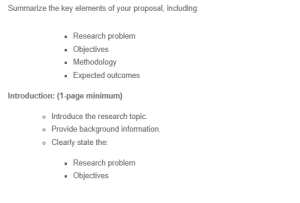
Summarize the key elements of your proposal, including:
Impact of Air Pollution
-
-
- Research problem
- Objectives
- Methodology
- Expected outcomes
-
Introduction: (1-page minimum)
-
- Introduce the research topic.
- Provide background information.
- Clearly state the:
-
-
- Research problem
- Objectives
-
 Complete the order form and upload all of your files, including any instructions, rubrics, or other materials provided by your instructor.
  Complete the order payment after filling in the order form. We’ll receive your order and assign it to a writer.
 The assigned writer will complete your paper and forward it to our Editing Team for review and approval.
 Once approved by the editor, the completed paper will be uploaded to your account for you to download, review and approve.