
Discussion – Tuberculosis
Tuberculosis (TB) is a contagious bacterial infection primarily affecting the lungs caused by Mycobacterium tuberculosis. TB can also affect other parts of the body except nails and hair. It is transmittable through droplets in the air produced when an infected person coughs or sneezes (Tobin & Tristram, 2024). Some of the predisposing factors are immunosuppression, living in an overcrowded place, prolonged contact with patients, and poor nutrition.TB can be classified into two: the latent and active forms. People with latent TB have
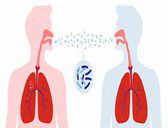
the bacteria within their bodies but do not present the symptoms or infect others; however, they may become ill with TB if their immune system declines. Active TB is when the Bacteria start to replicate, and the immune system’s defenses cannot halt the process. The person develops symptoms and may transmit the bacterium to other people.
Pathophysiology of TB commences from the deposition of Inhaled Mycobacterium tuberculosis bacilli in alveoli that are phagocytosed by macrophages but often survive and multiply, which causes the formation of granulomas and the potential for reactivation of the infection (Lyu et al., 2024). These cardinal features of active TB are abbreviated by the mnemonic COUGH: C –Cough (persistent), O – Output (sputum or blood), U – Unintentional weight loss, G – General malaise (weakness or fatigue), H – Hemoptysis (coughing up of blood). These symptoms progress slowly and may often go unnoticed, thus resulting in delayed diagnosis, particularly in developing countries. TB may also affect other parts of the body apart from the lungs, resulting in extrapulmonary TB. Hence, there is a need for early clinical diagnosis to prevent further complications and transmission.
The diagnosis of TB is done through physical examination and through further tests, which include the Mantoux tuberculin skin test, interferon-gamma release assays, sputum smear microscopy, and GeneXpert tests (Pagaduan & Ghaith Altawallbeh, 2023).Management entails a combination of drugs known by the acronym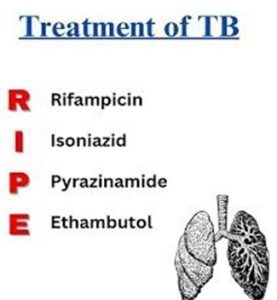
RIPE: Rifampicin, Isoniazid, Pyrazinamide, and Ethambutol
, followed by a continuation phase, which consists of rifampicin and
isoniazid only. Treatment is usually for six months or more, and the highly stringent regimen is managed by directly observed anti-TB therapy. The Bacille Calmette-Guerin (BCG) vaccine administered at birth in TB-endemic areas helps prevent severe TB in children, such as TB meningitis and miliary TB.
References
Lyu, J., Narum, D. E., Baldwin, S. L., Larsen, S. E., Bai, X., Griffith, D. E., Dartois, V., Naidoo, T., Steyn, A. J. C., Coler, R. N., & Chan, E. D. (2024). Understanding the development of tuberculous granulomas: Insights into host protection and pathogenesis, a review in humans and animals. Frontiers in Immunology, 15. https://doi.org/10.3389/fimmu.2024.1427559
Pagaduan, J. V., & Altawallbeh, G. (2023). Advances in TB testing. Advances in Clinical Chemistry, 33–62. https://doi.org/10.1016/bs.acc.2023.03.003
Tobin, E. H., & Tristram, D. (2024, December 22). Tuberculosis overview. StatPearls – NCBI Bookshelf. https://www.ncbi.nlm.nih.gov/books/NBK441916/
ORDER A PLAGIARISM-FREE PAPER HERE
We’ll write everything from scratch
Question 
Discussion – Tuberculosis
Instructions:
Choose a topic from the exam “Focus Sheet” sign up list
Gather information on the topic and find a way to teach the topic to your peers.
Discussion – Tuberculosis
Be creative. You can use images, diagrams, mnemonic devices, audio/video (your content only), algorithms, etc.
Be sure to cite any references for resources used.
After you’ve posted, find 2 peers and give respectful, constructive feedback on their topic. Feel free to ask any questions you may have about their topic.
Be sure to check your topic frequently to answer any questions from peers or the instructor to get full points.
Purpose:
The purpose of the threaded discussion is to promote dialogue among students and faculty related to course competencies and constructs to enhance mastery of knowledge related to course objectives.
Requirements:
The student must provide the initial substantive response to the discussion question/topic(s) posted by the course faculty by Friday of those weeks with a discussion board assignment.
The student must also provide a minimum of two additional responses to two student colleagues on two different days by Tuesday of those weeks with a discussion board assignment.
All questions posed to the initial student post by course faculty need to be answered by the student to earn full credit for the discussion board assignment.
This should be substantive feedback to a student colleague’s response to the question/topic posted by the course faculty. All responses must be respectful and thoughtful.
Discussion boards are not opinion boards. Students are expected to have scholarly sources to support their claims and constructs presented in the original post and citations must be provided. While scholarly resources are not required for your response posts, they do strengthen your posts and you must cite information taken from a source. Citations for parts of posts that are synthesized from the course text, peer-reviewed research articles, and other credible sources are required. Course faculty monitor for the compliance of citations with Turnitin evaluation of the posts intermittently during the course session.
 Complete the order form and upload all of your files, including any instructions, rubrics, or other materials provided by your instructor.
  Complete the order payment after filling in the order form. We’ll receive your order and assign it to a writer.
 The assigned writer will complete your paper and forward it to our Editing Team for review and approval.
 Once approved by the editor, the completed paper will be uploaded to your account for you to download, review and approve.