
Case Study Analysis: Sickle Cell Anemia in an Adolescent Patient
Sickle cell anemia (SCA) is a chronic, genetically inherited hemoglobinopathy that occurs most commonly in people of African descent. It is a condition characterized by periodic episodes of extreme pain, anemia, and an increased susceptibility to infection because of sickled red blood cells. In this case, a 16-year-old African American male, Marcus, comes in feeling lethargic and exhibits symptoms reflective of the acute and chronic picture of SCA. The pathophysiological mechanisms that underlie his symptoms, the genetic cause and inheritance of the disease, its effect on the immune system, and current treatment will be discussed, including culturally sensitive strategies that can be employed to increase medication adherence.
Cellular Pathophysiological Processes and Symptom Presentation
Marcus’s clinical presentation of knee and chest pain, fatigue, scleral icterus, and tachycardia is that of a vaso-occlusive crisis secondary to red blood cell sickling. This results from a mutation in the β-globin gene that causes hemoglobin S (HbS) polymerization in reduced oxygen tension. Such deformed erythrocytes are rigid and adhesive, occlude the microcirculation, and impair tissue oxygenation (Ehsan & Maruvada, 2023). This causes ischemic pain, particularly in areas of high metabolic demand, such as the joints and chest. Low hemoglobin levels, elevated LDH, bilirubin, and reticulocyte levels confirm the ongoing hemolysis, the hallmark of the disease.
Genetic Mutation and Mode of Inheritance
Sickle cell disease is caused by an autosomal recessive point mutation at the HBB gene that substitutes glutamic acid for valine at position six of the beta-globin chain, as noted by Elendu et al. (2023). Marcus inherited one mutated gene from both parents, and his mother was an established trait carrier. The mutation results in the formation of HbS, which makes the red blood cells sickle. Due to his ethnicity and origin, Marcus’s probability of inheriting SCA was extremely high, and his family members should be given genetic counseling.
Immune System Effects of Sickle Cell Disease
SCA results in immune dysfunction due to functional asplenia caused by repeated splenic infarcts. It impairs the clearance of encapsulated bacteria and enhances vulnerability to infections, particularly in adolescents and children (Azevedo & Malmegrim, 2020). Marcus’s weakness and low-grade fever may be presenting symptoms of an inflammatory or infectious process. Chronic hemolysis and systemic inflammation further deplete the immune system. Ehsan and Maruvada (2023) illustrate that the sickling process initiates leukocyte-endothelial interactions, which further increases inflammation and leads to vascular damage.
Hydroxyurea and Targeted Treatment Mechanisms
Hydroxyurea is the most effective disease-modifying drug in SCA. It promotes the production of fetal hemoglobin (HbF), which inhibits sickling, reduces hemolysis, and decreases the frequency of pain crises, as stated by Riley et al. (2024). Its effectiveness is lost in Marcus due to a lack of adherence. His presentation is likely secondary to lost disease control secondary to doses not taken. Monitoring and serial reinforcement of hydroxyurea’s benefits are needed for disease management.
Culturally Sensitive Education and Adherence Strategies
Teenagers are prone to not following medication as instructed, especially in chronic conditions like SCA. APRNs must use culturally responsive teaching strategies that are appropriate for Marcus’s age and origin. Caldwell (2020) suggests the use of family members, engaging familiar role models, and using technology like medication apps to improve compliance. Debunking myths and engaging Marcus in his care can improve compliance and outcomes.
Conclusion
Marcus’s presentation shows the systemic and cellular consequences of sickle cell anemia. Vaso-occlusion, hemolysis, and immune dysfunction underlie the disease’s pathogenesis caused by genetic mutation. While hydroxyurea targets treatment, it does so only if one uses it consistently. Incorporating culturally and age-appropriate education strategies allows APRNs to work with Marcus to improve his adherence and quality of life, thus reducing disease complications and hospitalizations.
References
Azevedo, J. T. C., & Malmegrim, K. C. R. (2020). Immune mechanisms involved in sickle cell disease pathogenesis: Current knowledge and perspectives. Immunology Letters, 224, 1–11. https://doi.org/10.1016/j.imlet.2020.04.012
Caldwell, E. P. (2020). Health literacy in adolescents with sickle cell disease: The influence of caregiver health literacy. Journal for Specialists in Pediatric Nursing, 25(2). https://doi.org/10.1111/jspn.12284
Ehsan, M., & Maruvada, S. (2023). Sickle cell anemia. Nih.gov; StatPearls Publishing. https://www.ncbi.nlm.nih.gov/books/NBK482164/
Elendu, C., Amaechi, D. C., Alakwe-Ojimba, C. E., Elendu, T. C., Elendu, R. C., Ayabazu, C. P., Aina, T. O., Aborisade, O. B., & Adenikinju, J. S. (2023). Understanding sickle cell disease: Causes, symptoms, and treatment options. Medicine, 102(38), e35237–e35237. https://doi.org/10.1097/md.0000000000035237
Riley, C., Kraft, W. K., & Miller, R. (2024). Hydroxyurea in the sickle cell disease modern era. Expert Review of Clinical Pharmacology, 17(9), 777–791. https://doi.org/10.1080/17512433.2024.2390915
ORDER A PLAGIARISM-FREE PAPER HERE
We’ll write everything from scratch
Question 
Case Study Analysis: Sickle Cell Anemia in an Adolescent Patient
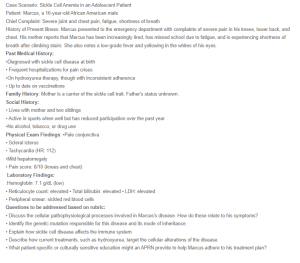
Case Scenario: Sickle Cell Anemia in an Adolescent Patient
Patient: Marcus, a 16-year-old African American male
Chief Complaint: Severe joint and chest pain, fatigue, shortness of breath
History of Present Illness: Marcus presented to the emergency department with complaints of severe pain in his knees, lower back, and chest. His mother reports that Marcus has been increasingly tired, has missed school due to fatigue, and is experiencing shortness of breath after climbing stairs. She also notes a low-grade fever and yellowing in the whites of his eyes.
Case Study Analysis – Sickle Cell Anemia in an Adolescent Patient
Past Medical History:
•Diagnosed with sickle cell disease at birth
• Frequent hospitalizations for pain crises
•On hydroxyurea therapy, though with inconsistent adherence
• Up to date on vaccinations
Family History: Mother is a carrier of the sickle cell trait. Father’s status unknown.
Social History:
• Lives with mother and two siblings
• Active in sports when well but has reduced participation over the past year
•No alcohol, tobacco, or drug use
Physical Exam Findings: •Pale conjunctiva
• Scleral icterus
• Tachycardia (HR: 112)
•Mild hepatomegaly
• Pain score: 8/10 (knees and chest) Laboratory Findings:
.Hemoglobin: 7.1 g/dL (low)
• Reticulocyte count: elevated • Total bilirubin: elevated • LDH: elevated
• Peripheral smear: sickled red blood cells
Questions to be addressed based on rubric:
• Discuss the cellular pathophysiological processes involved in Marcus’s disease. How do these relate to his symptoms?
• Identify the genetic mutation responsible for this disease and its mode of inheritance.
• Explain how sickle cell disease affects the immune system.
• Describe how current treatments, such as hydroxyurea, target the cellular alterations of the disease.
• What patient-specific or culturally sensitive education might an APRN provide to help Marcus adhere to his treatment plan?
 Complete the order form and upload all of your files, including any instructions, rubrics, or other materials provided by your instructor.
  Complete the order payment after filling in the order form. We’ll receive your order and assign it to a writer.
 The assigned writer will complete your paper and forward it to our Editing Team for review and approval.
 Once approved by the editor, the completed paper will be uploaded to your account for you to download, review and approve.