
Discussion: Isotretinoin and Depression
Isotretinoin is a retinoid that is commonly prescribed in the treatment of severe nodular acne and is a known cause of depression as a side effect (Kridin & Ludwig, 2023). The mechanism of action of isotretinoin involves decreasing the size of sebaceous glands and the production of sebum; it is also capable of influencing the neurotransmission of the central nervous system, specifically that of serotonin and dopamine neurotransmission. These monoamines are associated with mood regulation, and their dysregulation might explain the presence of depressive symptoms in susceptible individuals. Also, isotretinoin has been linked to neuroinflammation and hippocampal dysfunction, which is an additional confirmation of its possible association with disturbances in mood. It is vital to consider isotretinoin as a potential trigger of medication-induced depression to intervene early.
If I suspected isotretinoin was contributing to a patient’s depressive symptoms, my collaboration with another provider, such as a dermatologist, would be prompt and structured. First, I would document the depressive symptoms onset, duration, and severity in connection with the initiation of isotretinoin therapy. It would be followed by a detailed examination of the medical history of the patient, a list of medications they take, and their mental state to exclude other etiologies (Nichol et al., 2024). I would then share this information with the prescribing dermatologist through secure clinical messaging or a case conference with objective data and patient complaints. The interprofessional communication would enable collective decision-making on changing the dose, medication withdrawal, or considering alternative treatments.
I would implement a patient-centered, evidence-based approach to this process informed by clinical safety priorities. My initial steps would be reaching out to the patient with an open dialogue concerning the possible connection between the medication and mood alterations, and making sure that the interventions are introduced with the consent of the patient. At the same time, I would perform depression screening with the help of the validated assessment methods like the PHQ-9 to measure the severity of symptoms and assess trends (Siniscalchi et al., 2020). Before the involvement of the dermatologist, I would apply supportive options, such as referral to psychotherapy. Active monitoring and documentation will guarantee treatment efficacy and the safety of the patient.
References
Kridin, K., & Ludwig, R. J. (2023). Isotretinoin and the risk of psychiatric disturbances: A global study shedding new light on a debatable story. Journal of the American Academy of Dermatology, 88(2), 388–394. https://doi.org/10.1016/j.jaad.2022.10.031
Nichol, J. R., Sundjaja, J. H., & Nelson, G. (2024, April 30). Medical history. StatPearls – NCBI Bookshelf. https://www.ncbi.nlm.nih.gov/books/NBK534249/
Siniscalchi, K. A., Broome, M. E., Fish, J., Ventimiglia, J., Thompson, J., Roy, P., Pipes, R., & Trivedi, M. (2020). Depression screening and measurement-based care in primary care. Journal of Primary Care & Community Health, 11. https://doi.org/10.1177/2150132720931261
ORDER A PLAGIARISM-FREE PAPER HERE
We’ll write everything from scratch
Question 
Discussion: Isotretinoin and Depression
Depression
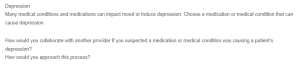
Many medical conditions and medications can impact mood or induce depression. Choose a medication or medical condition that can cause depression.
Isotretinoin and Depression
How would you collaborate with another provider if you suspected a medication or medical condition was causing a patient’s depression?
How would you approach this process?
 Complete the order form and upload all of your files, including any instructions, rubrics, or other materials provided by your instructor.
  Complete the order payment after filling in the order form. We’ll receive your order and assign it to a writer.
 The assigned writer will complete your paper and forward it to our Editing Team for review and approval.
 Once approved by the editor, the completed paper will be uploaded to your account for you to download, review and approve.