
Reflections on ATI Real Life RN Maternal and Newborn 4.0: Preterm Labor
It is necessary to practice culturally competent care in preterm labor. Certain cultures use more natural remedies than medications, so patients are reluctant regarding tocolytic therapy like nifedipine or magnesium sulfate, as Milford et al. (2023) noted. Nurses must communicate effectively, educate patients about risks and benefits, and honor personal beliefs: Reflections on ATI Real Life RN Maternal and Newborn 4.0: Preterm Labor.
Furthermore, pain is culturally variable, which affects how patients express discomfort and respond to intervention. Some minimize pain due to cultural norms; therefore, nurses must use alternative evaluation methods to offer appropriate care.
Notably, family involvement is another significant cultural factor. Pregnancy and childbirth are family affairs in some cultures, with older individuals or male relatives making medical decisions on behalf of the patient (Aynalem et al., 2023). Nurses must balance patient autonomy and respect for these cultural norms with informed consent.
Language variation can also affect patient comprehension, as can using interpreters or visual information to convey messages. Delivering culturally sensitive care enhances patient trust and compliance with medical advice.
Besides, one of the ethical challenges in the case was giving magnesium sulfate for fetal neuroprotection despite its maternal risks of respiratory depression and hypotension (Shepherd et al., 2024). To resolve this, I would provide informed consent, inform the patient about the risks and benefits, monitor closely for adverse effects, and respect the patient’s autonomy to decline treatment.
A key “aha” moment was the realization of the need to prioritize fetal status using the ABC approach. When late decelerations on the fetal monitor were noted, repositioning the patient, applying oxygen, and maintaining IV fluids assisted with improving fetal oxygenation. This highlighted the importance of swift, evidence-based actions to avoid fetal compromise.
Subsequently, one of the challenges was interpreting fetal heart rate. Critical thinking was needed to distinguish between early, late, and variable decelerations, and initially, I lacked confidence in making rapid decisions. Another challenging experience was managing a prolapsed umbilical cord, which showed that swift action is essential to prevent fetal distress.
Three of the most important concepts I gained from this activity are fetal heart rate interpretation, prompt medication administration, and patient-centered communication. Kauffmann and Silberman (2023) explain how fetal monitoring interpretation enables early identification of distress and corresponding interventions, which I will utilize in my future cases of maternal care. Using drugs like tocolytics and corticosteroids at the appropriate time is vital in postponing preterm labor and promoting neonatal outcomes, as Wilson et al. (2022) indicated. Finally, using cultural sensitivity in patient education and planning of care ensures that interventions are effective and considerate of patient values.
References
Aynalem, B. Y., Melesse, M. F., & Bitewa, Y. B. (2023). Cultural beliefs and traditional practices during pregnancy, child birth, and the postpartum period in East Gojjam Zone, Northwest Ethiopia: A qualitative study. Women’s Health Reports, 4(1), 415–422. https://doi.org/10.1089/whr.2023.0024
Kauffmann, T., & Silberman, M. (2023). Fetal monitoring. PubMed; StatPearls Publishing. https://www.ncbi.nlm.nih.gov/books/NBK589699/
Milford, C., Smith, E., Ngure, K., Thuo, N. B., Newmann, S., Lazarus, N., Beksinska, M., Mugo, N., & Rand, L. (2023). Cultural considerations and beliefs surrounding preterm birth in Kenya and South Africa. Reproductive Health, 20(1). https://doi.org/10.1186/s12978-023-01633-9
Shepherd, E. S., Goldsmith, S., Doyle, L. W., Middleton, P., Marret, S., Rouse, D. J., Pryde, P., Wolf, H. T., & Crowther, C. A. (2024). Magnesium sulphate for women at risk of preterm birth for neuroprotection of the fetus. Cochrane Library, 2024(5). https://doi.org/10.1002/14651858.cd004661.pub4
Wilson, A., Hodgetts-Morton, V. A., Marson, E. J., Markland, A. D., Larkai, E., Papadopoulou, A., Coomarasamy, A., Tobias, A., Chou, D., Oladapo, O. T., Price, M. J., Morris, K., & Gallos, I. D. (2022). Tocolytics for delaying preterm birth: A network meta-analysis (0924). Cochrane Database of Systematic Reviews, 2022(8). https://doi.org/10.1002/14651858.cd014978.pub2
It is necessary to practice culturally competent care in preterm labor. Certain cultures use more natural remedies than medications, so patients are reluctant regarding tocolytic therapy like nifedipine or magnesium sulfate, as Milford et al. (2023) noted. Nurses must communicate effectively, educate patients about risks and benefits, and honor personal beliefs: Reflections on ATI Real Life RN Maternal and Newborn 4.0: Preterm Labor.
ORDER A PLAGIARISM-FREE PAPER HERE
We’ll write everything from scratch
Question 
THIS SCENARIO IS FROM ATI REAL LIFE RN MATERNAL AND NEWBORN 4:0 PRETERM LABOR
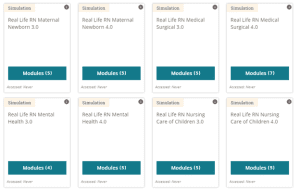
- Provide individual reflections on the above scenario in the D2L discussion board outlined for your clinical section. You may want to create a word document that you can then cut and paste into the discussion board. Please answer the following questions.
1.Review cultural considerations when caring for this client. Create a word document and write at least two paragraphs on cultural considerations that need to be considered when caring for your client – Include reference (1 hour). Submit word document to D2L.
Reflections on ATI Real Life RN Maternal and Newborn 4.0: Preterm Labor
- Reflect on any ethical dilemmas uncovered during the scenario and describe how you might respond differently based on the situation. Provide evidence-based resources to support your response.
- Describe an “Aha” moment you experienced during this learning experience and how it will expand your nursing care.
- What are some aspects of client care that you didn’t feel prepared to make clinical decision for in the scenario and/or after completing the nursing care plan?
- Describe three to five important concepts you learned from the scenario; then describe how you will apply your knowledge of each concept to future client situations. Provide evidence-based resources to support your response.
- Once you have answered the above questions respond to at least two of your peers with a minimum of 100 words each that gives support for or questions/deepens some of their thinking.
- PLEASE NO USE OF AI, INSTRUCT USES AI DETECTOR, AND( USE SIMPLE TERMS.)
- THE COMPLETED SIMULATION REPORT IS ATTACHED FOR ATI REAL LIFE RN MATERNAL AND NEWBORN 4:0 PRETERM LABOR. PLEASE REVIEW THE FILE ALTERNATIVELY https://www.studocu.com/en-us/
document/west-coast-baptist- college/maternal/rn-maternal- newborn-preterm-labor/ 100852783 (Use this link it will take you to see the scenario).
 Complete the order form and upload all of your files, including any instructions, rubrics, or other materials provided by your instructor.
  Complete the order payment after filling in the order form. We’ll receive your order and assign it to a writer.
 The assigned writer will complete your paper and forward it to our Editing Team for review and approval.
 Once approved by the editor, the completed paper will be uploaded to your account for you to download, review and approve.