
Non-Pharmaceutical Interventions
Hello Darrel,
Thank you, Darrel, for this intriguing post. Non-pharmaceutical interventions offer affordable alternatives to counter and mitigate the spread of pneumonia and other diseases. Such non-pharmaceutical interventions can be implemented for individuals and as actions that require the engagement of the entire community. At all levels of implementation of the non-pharmaceutical interventions, decisions must be made as different choices on the suitable interventions may vary across individuals and communities. Although the non-pharmaceuticals mentioned for pneumonia and STDs promise to reduce the number of new infections, they may not be compelling enough if just implemented. Health literacy as a social determinant of health is required to improve the understanding of health information and decision-making in health (Nutbeam & Lloyd, 2020). Therefore, educating people on pneumonia and STDs and how each disease spreads across communities is critical for effectively implementing non-pharmaceutical interventions.
Hello Jessica Coffman,
This is an exciting post. Upon prescribing drugs to their patients, practitioners are responsible for providing information about them. Practitioners need to understand that most patients do not take the time to read the leaflets provided along with the prescribed medications. The information on the drugs supplied in the brochures may also be misinterpreted or misunderstood. Some patients lack the literacy levels to understand the drug information provided. It is essential that the prescribing practitioner deliberately offer information on the side effects and interactions of the prescribed drugs. Before making prescription decisions, it is also necessary that the practitioner questions the patients on any other medications they may be using, including over-the-counter (OTC) drugs and any herbal concoctions. According to Rosenthal and Burchum (2021), most patients do not consider OTCs and alternative medications essential and may not mention such medications during a prescription. Consequently, the lack of information on previous pharmaceutical usage may affect the efficiency of the prescribed drugs and the severity of their side effects.
References
Nutbeam, D., & Lloyd, J. E. (2020). She understands and responds to health literacy as a social determinant of health. Annual review of public health.
Rosenthal, L. D., & Burchum, J. R. (2021). Lehne’s Pharmacotherapeutics for Advanced Practice Nurses and Physician Assistants. Elsevier.
ORDER A PLAGIARISM-FREE PAPER HERE
We’ll write everything from scratch
Question 
Non-Pharmaceutical Interventions
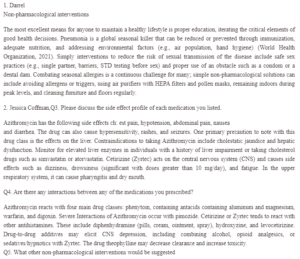
1. Darrel
Non-pharmacological interventions
The most excellent means for anyone to maintain a healthy lifestyle is proper education, iterating the critical elements of good health decisions. Pneumonia is a global seasonal killer that can be reduced or prevented through immunization, adequate nutrition, and addressing environmental factors (e.g., air population, hand hygiene) (World Health Organization, 2021). Simply interventions to reduce the risk of sexual transmission of the disease include safe sex practices (e.g., single partner, barriers, STD testing before sex) and proper use of an obstacle such as a condom or a dental dam. Combating seasonal allergies is a continuous challenge for many; simple non-pharmacological solutions can include avoiding allergens or triggers, using air purifiers with HEPA filters and pollen masks, remaining indoors during peak levels, and cleaning furniture and floors regularly.
2. Jessica Coffman,
Q3. Please discuss the side effect profile of each medication you listed.
Azithromycin has the following side effects ch: est pain, hypotension, abdominal pain, nausea
and diarrhea. The drug can also cause hypersensitivity, rashes, and seizures. One primary precaution to note with this drug class is the effects on the liver. Contraindications to taking Azithromycin include cholestatic jaundice and hepatic dysfunction. Monitor for elevated liver enzymes in individuals with a history of liver impairment or taking cholesterol drugs such as simvastatin or atorvastatin. Cetirizine (Zyrtec) acts on the central nervous system (CNS) and causes side effects such as dizziness, drowsiness (significant with doses greater than 10 mg/day), and fatigue. In the upper respiratory system, it can cause pharyngitis and dry mouth.
Q4. Are there any interactions between any of the medications you prescribed?
Azithromycin reacts with four main drug classes: phenytoin, containing antacids containing aluminum and magnesium, warfarin, and digoxin. Severe Interactions of Azithromycin occur with pimozide. Cetirizine or Zyrtec tends to react with other antihistamines. These include diphenhydramine (pills, cream, ointment, spray), hydroxyzine, and levocetirizine. Drug-to-drug additives may elicit CNS depression, including combining alcohol, opioid analgesics, or sedatives/hypnotics with Zyrtec. The drug theophylline may decrease clearance and increase toxicity.
Q5. What other non-pharmacological interventions would be suggested
As for non-pharmacological interventions, the patient should practice safe intercourse using protective measures such as condoms, along with frequent testing before intercourse with his designated partner(s). To manage his community-required pneumonia with non-pharmacological efforts, the patient should be educated on practicing lifestyle, dietary modifications, and hygiene. Encourage the patient to wash hands regularly (i.e., before and after contact with all persons, materials, or objects) and maintain a fluid intake of 1500-2000 mL/day to decrease the viscosity of secretions. Encourage the patient to supplement with vitamin C (500 to 1000 mg) and zinc (50 to 220 mg) daily. Teach the patient to cover his cough and avoid sharing utensils, straws, or other personal items with others. Encourage the patient to eat a well-balanced diet with fresh fruits and veggies and get adequate rest to allow his body to recover and repair. To manage his symptoms of allergic rhinitis or seasonal allergies, the patient can significantly benefit from limiting contact with triggers that instigate reactions such as certain pollens, dust, and animals (pet hair), including pesticides, detergents, or foods/spices. The patient should consider an air purifier equipped with a HEPA filter. In his designated housing conditions, suggestions include avoiding opening windows, using an air conditioner as needed instead, regularly washing and changing sheets and blankets, prohibiting smoking, cleaning furniture and floors regularly, and keeping any pets off the table. Lastly, keeping up with miniature measures such as repairing indoor leaks and optimizing venting to help reduce the risk of mold.
 Complete the order form and upload all of your files, including any instructions, rubrics, or other materials provided by your instructor.
 Complete the order payment after filling in the order form. We’ll receive your order and assign it to a writer.
 The assigned writer will complete your paper and forward it to our Editing Team for review and approval.
 Once approved by the editor, the completed paper will be uploaded to your account for you to download, review and approve.