
Analyzing Group Techniques
Group Therapy Techniques that Were Demonstrated
In the selected video, “Irvin Yalom inpatient group psychotherapy,” several group therapy techniques were demonstrated. The video showcased techniques, including active listening, empathetic responses, and encouraging self-disclosure. The therapist and the group members demonstrated these techniques well (PsychotherapyNet, 2009). Furthermore, the therapist effectively employed active listening skills by attentively focusing on each individual’s experiences and emotions, which created a safe and supportive environment for the participants. Additionally, the therapist’s empathetic responses demonstrated genuine understanding and compassion toward the group members, fostering a sense of trust and openness (PsychotherapyNet, 2009).
The encouragement of self-disclosure was another technique that was demonstrated. The therapist actively encouraged group members to share their personal experiences, thoughts, and feelings, creating an atmosphere of mutual sharing and vulnerability. This technique facilitated deeper self-reflection and interpersonal connections among the group members (Yalom & Leszcz, 2019).
Are you interested in an unpublished edition of this copy ? Reach out to us. Our team is ready to help.
Evidence from the Literature that Supports the Techniques Demonstrated
The techniques demonstrated in the video, such as active listening, empathetic responses, and encouraging self-disclosure, are supported by evidence from the group therapy literature. Numerous studies have highlighted the significance of active listening in group therapy. Active listening involves attentively focusing on verbal and nonverbal cues, which enhances understanding and empathy toward group members. Burlingame et al. (2021) found that active listening facilitates a therapeutic alliance, promotes trust, and encourages emotional expression within the group setting.
Another technique exhibited was empathic responses, which have been extensively studied in group therapy. Empathy is considered a core therapeutic factor that fosters connection and understanding between the therapist and group members. Literature suggests that empathetic responses contribute to increased self-awareness, emotional regulation, and improved interpersonal relationships among group members (Wheeler, 2020).
Research supports the encouragement of self-disclosure and indicates its positive effects in group therapy. Self-disclosure allows individuals to share personal experiences, thoughts, and feelings, promoting a sense of trust, validation, and mutual support. Studies have shown that self-disclosure facilitates therapeutic growth, increases group cohesion, and encourages the exploration of deeper emotional issues (Wheeler, 2020).
What the Therapist Did Well
The therapist in the video demonstrated several commendable qualities and skills. Firstly, the therapist displayed exceptional active listening skills. They attentively focused on each group member’s verbal and nonverbal cues, maintaining eye contact and displaying genuine interest (PsychotherapyNet, 2009). This active listening created a safe and supportive space for participants to express themselves fully. Additionally, the therapist effectively employed empathetic responses. They displayed genuine understanding and compassion toward the group members’ experiences, emotions, and challenges (PsychotherapyNet, 2009). The therapist’s empathetic responses were validating and non-judgmental, fostering trust and a sense of acceptance within the group.
Moreover, the therapist skillfully encouraged self-disclosure. They created an environment where group members felt comfortable sharing personal experiences and emotions. The therapist asked open-ended questions, provided prompts, and actively listened to facilitate deeper self-exploration and interpersonal connections (PsychotherapyNet, 2009). Furthermore, the therapist demonstrated excellent facilitation skills by ensuring equal participation, managing dynamics, and redirecting the conversation when needed. They balanced individual contributions with the overall group process, maintaining a cohesive and productive therapeutic atmosphere (PsychotherapyNet, 2009).
Things That Would Have Been Handled Differently
While the therapist in the video demonstrated several effective techniques, one aspect that could have been handled differently is the level of structure and organization within the group session. The therapist could have implemented a clearer agenda or introduced a more structured format to guide the discussion and ensure all participants had equal opportunities to share (Tschuschke & Dies, 2020).
By establishing a structured framework, the therapist could have provided a more organized session flow, allowing for a balanced distribution of time and attention among group members. This could have prevented potential tangents or dominant speakers from overshadowing others (Tschuschke & Dies, 2020). A structured approach could have also facilitated a more focused exploration of specific topics or goals, enhancing the overall therapeutic experience for the group.
The Insight I Gained from Watching the Therapist Handle Group Therapy
One insight gained from watching the therapist handle the group therapy session is the power of creating a safe and non-judgmental space for participants to share their experiences. The therapist consistently displayed a welcoming and accepting attitude, allowing individuals to express their thoughts and emotions freely. This insight highlights the importance of establishing trust and creating an environment where group members feel comfortable being vulnerable. By providing a safe space, the therapist fostered a sense of connection and support among the participants, enabling them to explore and process their emotions more openly (American Psychiatric Association, 2013). This emphasizes creating a therapeutic atmosphere that encourages authenticity and emotional expression in group therapy settings.
How I Would Lead the Group Session
Handling a difficult situation with a disruptive group member requires a careful and empathetic approach. Firstly, I would address the disruptive behavior privately with the individual, expressing my concerns while emphasizing the importance of a respectful and supportive environment. I encourage open communication, allowing disruptive members to share their perspectives and concerns. To elicit participation in the group, I would employ various strategies. Firstly, establish clear guidelines and expectations for participation, emphasizing the importance of active engagement. I encourage group members to share their thoughts and experiences by asking open-ended questions, providing prompts, and using techniques like round-robin sharing or small group discussions. I would also actively listen and validate each person’s contributions to create a safe, inclusive space promoting participation.
In different phases of group therapy, I anticipate initial hesitancy and guardedness as members get acquainted. As trust develops, deeper sharing, emotional exploration, and interpersonal connections will likely emerge. Some challenges that may arise in group therapy include managing conflicts, addressing power dynamics, and maintaining confidentiality. However, these challenges can be opportunities for growth and learning within the group.
The benefits of group therapy include receiving support and validation from peers, gaining diverse perspectives and insights, and developing interpersonal skills. Group therapy offers a sense of belonging, reduces feelings of isolation, and fosters a supportive community (Tschuschke & Dies, 2020). However, challenges may arise from varying levels of participation, potential resistance to change, and balancing individual needs within the group dynamic.
References
American Psychiatric Association. (2013). Diagnostic and statistical manual of mental disorders (5th ed.).
Burlingame, G. M., Strauss, B., & Joyce, A. S. (2021). Change mechanisms and effectiveness of small group treatments. In M. J. Lambert (Ed.), Handbook of Psychotherapy and Behavior Change (7th ed., pp. 399–441). Oxford University Press.
Tschuschke, V., & Dies, R. (2020). Group psychotherapy: Overview of group processes and techniques. In J. C. Norcross, G. R. VandenBos, D. K. Freedheim, & M. J. Lambert (Eds.), Handbook of Psychotherapy and Behavior Change (7th ed., pp. 505-537). Oxford University Press.
PsychotherapyNet. (2009, May 6). Irvin Yalom inpatient group psychotherapy video [Video]. YouTube. https://www.youtube.com/watch?v=05Elmr65RDg
Wheeler, K. (Ed.). (2020). Psychotherapy for the advanced practice psychiatric nurse: A how-to guide for evidence-based practice (3rd ed.). Springer Publishing.
Yalom, I. D., & Leszcz, M. (2019). The theory and practice of group psychotherapy. Basic Books.
ORDER A PLAGIARISM-FREE PAPER HERE
We’ll write everything from scratch
Question 
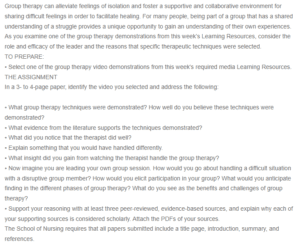
Analyzing Group Techniques
Group therapy can alleviate feelings of isolation and foster a supportive and collaborative environment for sharing difficult feelings in order to facilitate healing. For many people, being part of a group that has a shared understanding of a struggle provides a unique opportunity to gain an understanding of their own experiences.
As you examine one of the group therapy demonstrations from this week’s Learning Resources, consider the role and efficacy of the leader and the reasons that specific therapeutic techniques were selected.
TO PREPARE:
• Select one of the group therapy video demonstrations from this week’s required media Learning Resources.
THE ASSIGNMENT
In a 3- to 4-page paper, identify the video you selected and address the following:
• What group therapy techniques were demonstrated? How well do you believe these techniques were demonstrated?
• What evidence from the literature supports the techniques demonstrated?
• What did you notice that the therapist did well?
• Explain something that you would have handled differently.
• What insight did you gain from watching the therapist handle the group therapy?
• Now imagine you are leading your own group session. How would you go about handling a difficult situation with a disruptive group member? How would you elicit participation in your group? What would you anticipate finding in the different phases of group therapy? What do you see as the benefits and challenges of group therapy?
• Support your reasoning with at least three peer-reviewed, evidence-based sources, and explain why each of your supporting sources is considered scholarly. Attach the PDFs of your sources.
The School of Nursing requires that all papers submitted include a title page, introduction, summary, and references.