
American Youths’ Body Perception – The Roles Social Media Play
Class: Academic Writing II ENG-122-OL01
Name: Chrisann Henry
University: Saint Leo University
Professor: Mrs. Caroline Williams
Table of Contents
Acknowledgements …………………………………………………………….….3
Introduction………………………………………………………………………….4
Literature Review…………………………………………………………………..6
Body….…………………………………………………………………………….9
Conclusion…………………………………………………………………………11
Limitations…………………………………………………………………………11
Recommendations…………………………………………………………………12
Bibliography……………………………………………………………………….13
Acknowledgements
I am extremely appreciative of the guidance that my English professor, Mrs. Caroline Williams, bestowed upon me and my classmates. Her timely feedback is what I am most grateful for, as each comment equipped me with a new tactic to improve my writing. My mom, who served as my supporter during my worst moments of exhaustion and burnout, is also very much deserving of thanks. Without them, I could not have successfully written my paper.
Theme: Social Media
Topic: Implications of Social Media Use on Teenagers’ Mental and Physical Health
Research Question: To what extent does body image on social media affect American youths?
Independent Variable: The exposure of youths to social media’s unrealistic beauty standards
Dependent Variable: The extent to which the effect of students’ use of social media affects their mental health and self-esteem
Introduction
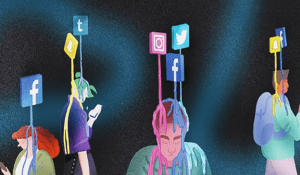
American adolescents and young adults, including myself, use social media applications like Instagram, TikTok, and Snapchat daily. In these apps, the young users constantly express themselves through worded posts, audio snippets, and even videos. In an attempt to seem flawless and perfect when participating in popular trends, some users, including celebrities, digitally alter and filter their images to appear skinny and/or curvy, free of cellulite and stretch marks, or anything remotely mirroring a normal and natural body.
Consequently, a great number of American youths have developed high levels of body dissatisfaction after trying to emulate the fake images being perpetuated online. Instead of loving and appreciating their bodies, many youths try to be someone they are not as a result of unrealistic beauty standards seen online. When they fail to meet these impossible standards, the issue escalates. These youths endanger their health when they end up with eating disorders like anorexia nervosa and bulimia. With young people giving in more to social media’s standards of beauty while talks surrounding mental health are consistently being stigmatized, this paper aims to spark change where youths feel free to carve out their unique identities and feel no fear to deviate from societal expectations.
Purpose of Research
Researching the exploration of the pros and cons of social media will most likely yield proper advocacy for youths’ mental health and will spark debates over how much of the content online, if any at all, is being moderated to ensure inclusivity and comfort for all.
Research Objectives
This research paper attempts to answer the following:
How does social media exposure impact body dissatisfaction and self-esteem in American youth?
What kind of influence do celebrities have on shaping American youths’ perception of their bodies?
What factors give rise to the negative effect of social media on youths’ body dissatisfaction?
Literature Review
American youths’ perceptions around body image have been and are still constantly being influenced by social media. In this literature review, the data and findings gathered from peer-reviewed articles and audio-visual sources will aid in the evaluation of the extent to which social media influences and negatively impacts the self-esteem and body satisfaction among American youths, particularly those spanning the adolescents aged twelve to seventeen, as well as young adults aged eighteen to twenty-five. At the same time, counterclaims supporting social media perpetuating body positivity and inclusivity are also explored and analyzed to ensure that all social media’s roles in influencing body image are reflected.
The Mental Pressure to Meet Unrealistic Beauty Expectations
According to Dias et al. (2021), “Social media can also perform some pressure regarding body image and eating behavior, caused by the idealistic appearance shown there in a very visual way.” This source’s research highlights just how impressionable youths are, leaving them quite susceptible to social media’s influences. It is revealed that more than ninety-two percent of American youths compare themselves to the unattainable beauty standards that are promoted by the influences that they keep up with. The eight studies that were conducted on American teens and young adults identified a glaring pattern where these youths’ body dissatisfaction rates dramatically increased the more that they exposed themselves to unrealistic body images.
In Rounsefell et al. (2020), the writer details how “the more dissatisfied a person feels about their body, the higher their risk of experiencing low self-esteem, depression, and poor quality of life.” Though these influencers’ images are manipulated with advanced technology like Adobe Photoshop and Airbrush, the youths still aim to have the same ‘perfect’ bodies.
The Role of Celebrity Influencers in Triggering Eating Disorders
When these youths inevitably fail to achieve the impossible beauty standards by going to the gym or via surgery, they turn to other methods to be “whipped into shape”. The documentary Toxic Social Media: Not Picture Perfect (2022) discusses a myriad of eating disorders and dieting that American youths subject themselves to to be thin. In the video, the news reporter mentions, “TikTok challenges became a huge trigger for Mariam. Like the face symmetry challenge or the jawline challenge. And triggered her battle with anorexia. At its lowest, Miriam’s weight plunged to 74 pounds and her heart stopped beating twice.”
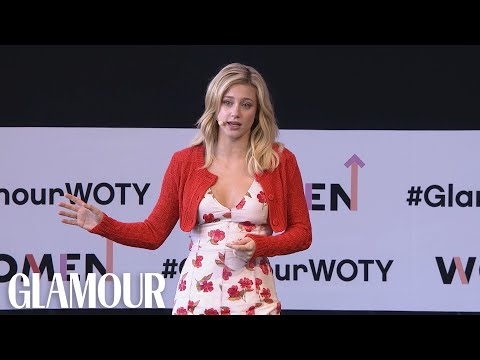
While these individuals with influence can trigger eating disorders, particularly anorexia and bulimia, the influencers also possess the power to inspire the youths to be more appreciative and accepting of the bodies that God blessed them with. In the multimedia source, Lili Reinhart’s Revealing Speech about Body Image | Glamour WOTY 2018 (2020), with the famous actress Lili Reinhart, she details:
“I didn’t think anything was wrong with my body until I was in an industry that rewards and praises people for having a smaller waist than I will ever have… I felt this strange constant struggle of having to live up to the expectation of the appearance that I had already established to the world so I found myself examining my body constantly in the mirror.”
Her speech stands out for its unique perspective as both a victim and influencer in social media culture. As a well-known figure among younger audiences, her mention of feeling insecure, as well as her call for authenticity, disrupts the carefully crafted nature of most social media content. Her story reveals how social media creates an environment where even those who appear to conform to beauty standards feel inadequate.
Counterclaims and Mental Health Solutions
Despite a majority of the data pointing to negative social media impacts on body image, there also exist some projects, namely Dove’s Self-Esteem Project (2020), where body positivity is valued and each individual feels safe in their skin. The Dove article starts by noting, “Claire, mom of 14-year-old Aoife, says, ‘My daughter is constantly reading teen mags, and the girls they use always look so flawless. How am I supposed to reassure her about her own looks when she has that to compare herself to?” Instead of feeling the need to put their lives in danger for the sake of meeting beauty standards, there is a rising percentage of advocacy on social media platforms such as TikTok and Instagram that teaches American youths to unlearn all of the misleading body images and learn to love their natural bodies.
“By realizing that media images are frequently manipulated, and rarely representative of real, inclusive and diverse beauty, your child can start to think more critically about the media and protect their body confidence when viewing pictures of celebrities and models. Help them understand that they shouldn’t compare the way they look to the unrealistic, fake images they see in the media.” (Dove, 2020)
Additionally, mental health professionals have also recommended implementing social media literacy classes in secondary and tertiary schools to ensure that future users feel empowered about their bodies and are satisfied with their overall appearance, whether inside or out. To sum up, the literature heavily exposes social media as a weapon that negatively impacts American youths, leading them to experience body dissatisfaction and ultimately seeking out unhealthy methods to emulate the unrealistic beauty standards being advertised online. Although there are benefits of social media that advocate for self-acceptance and inclusivity of all body types, the general consensus, backed by a plethora of evidence, points to all the dangers.
Body
Social media has a profound and detrimental impact on the body image of American youths, primarily contributing to body dissatisfaction and mental health problems. However, there are growing movements that advocate for body positivity. The phenomenon brings about negative impacts in the form of depression and the overall deterioration of youths’ mental health. Unsurprisingly, the research argument is quite debatable given the public’s differing views on its impacts. To some social media users, the platform perpetuates peer pressure and results in body resentment as a result of the unrealistic beauty standards that it promotes. On the other hand, though, a vast majority of its users also believe that social media is beneficial as it promotes body positivity and self-acceptance.
Before starting this research, I believed that the portrayal of the ‘ideal’ body image on social media impacted American youths negatively. An analysis of my five sources confirmed this. The scholarly articles reveal that youths, females in particular, often make drastic changes to their lifestyles to look like the women on social media. Little do these impressionable youths know that the perfect bodies they are desperate to emulate are not God-given but just products of Airbrush and Photoshop. It is also quite evident that a constant reinforcement of the “perfect” body on social media negatively impacts body confidence. Statistics, too, have even proven that more than fifty-four percent of American adolescents alone have seen ads online that have made them feel pressure to look different. (Dias et al., 2021, p. 46) The most eye-opening source that exposes the dangers of social media to American youths’ mental health is the video clip with the famous actress, Lili Reinhart. Anecdotal evidence was used where it was said, “I found myself examining my body constantly in the mirror.” This personal reflection heightens the audience’s understanding and empathy for the point being made about the pressure social media places on youths.
All evidence points to social media having drastic effects on how American youths perceive their bodies. It is no wonder, then, that there is an alarming rate of youths having low self-esteem and eating disorders, all thanks to their body dissatisfaction. At the same time, though, social media has started seeing a pushback on the promotion of “fake” bodies and instead a curve towards body positivity, where all body types are accepted and embraced. Though this is a major step in the right direction, it is yet to spark any real change, given the relaxed policies that still permit influencers to post digitally altered photos and thus, continue the cycle.
Conclusion
Social media connects us with friends and offers entertainment, but has, in recent years, been deemed a mixed blessing. It has unfortunately become a host for the perpetuation of unattainable beauty standards that have the potential to harm American youths’ self-esteem and perceptions about their bodies. This is no surprise considering just how impressionable and easily influenced their young minds are. In spite of this disadvantage, body positivity and self-acceptance, as well as education on the safe and responsible use of social media, are guaranteed to ensure that the negative impacts are mitigated, thus preserving the mental and physical health of America’s adolescents and young adults.
Limitations
This research mostly uses data collected from secondary sources rather than collecting raw data directly from American youths via surveys and/or focus groups. Though the use of previously published research enhances credibility, it also poses the risk of biases, as there might not be sufficient counterarguments, as well as the sample sizes of the previous research may not have been wide and/or general enough. Secondly, it is also worth mentioning how the negative aspects of social media almost completely overshadow the advantages of social media’s role in fostering a sense of community among its users. Concerning the youths, their ability to withstand online peer pressure is also undermined.
Recommendations
The Department of Education and mental health experts should make social media literacy a must-have in schools. We need to teach kids how to be mindful of their online presence and how to tell if what they see online is real or fake. We need to help them understand that the bodies they see online are often edited and not the real thing. Future research should also seek to find a solution or at least a middle ground where, instead of eradicating social media, guardrails can be put in place to monitor the interactions and posts, seeing to it that unrealistic and negative influences are banned.
Final Review Paragraph
Through its detailed analysis, your essay explicitly demonstrates how media standards of unattainable beauty cause young Americans to develop both negative body image and mental health conditions. Multiple sources in research strengthen both the credibility and applicability of the argument. However, the paper requires improvement, mainly in its formatting approach and concept connection structure. Better organization within sections and improved idea transition throughout the paper will create better readability and improve the paper’s overall structural coherence.
Bibliography
Dias, I., Hernâni-Eusébio, J., & Silva, R. (2021). “How many likes?”: The use of social media, body image insatisfaction and disordered eating. European Psychiatry, 64, S698. https://doi.org/10.1192/j.eurpsy.2021.1847
Is Your Child’s Perception of Beauty Distorted by Media Influence? (2020) https://www.dove.com/us/en/dove-self-esteem-project/help-for-parents/talking-about-app earance/perception-of-beauty.html
Lili Reinhart’s Revealing Speech about Body Image | Glamour WOTY 2018 (2020)
Rounsefell, K., Gibson, S., McLean, S., Blair, M., Molenaar, A., Brennan, L., Truby, H., & McCaffrey, T. A. (2020). Social media, body image and food choices in healthy young adults: A mixed methods systematic review. Nutrition & Dietetics, 77(1), 19–40. https://doi-org.saintleo.idm.oclc.org/10.1111/1747-0080.12581
Toxic social media: Not picture perfect. (2022). In Films On Demand. Films Media Group. https://fod-infobase-com.saintleo.idm.oclc.org/PortalPlaylists.aspx?wID=106199&xtid=292504
Consider starting with an example/statistic of social media’s impact to immediately engage readers.
What specific change do you want to see in social media practices?
Add a brief definition of/further explain ‘body dissatisfaction’ to explain its significance in your argument.
A transition sentence here could help bridge the paragraphs more smoothly.
Identifying the implications of these statistics could strengthen their relevance to your argument.
Explore the counterarguments more deeply to provide a well-rounded perspective.
Reiterate your main points in the conclusion to give readers with a takeaway message.
ORDER A PLAGIARISM-FREE PAPER HERE
We’ll write everything from scratch
Question 
American Youths’ Body Perception – The Roles Social Media Play
Once you’ve read through a second time, you’ll get to work reviewing. Please offer at least ten substantive comments within the body of the essay you are reviewing (for example, in Microsoft Word, you’d go to Insert> New Comment). You might use these questions to guide your comments:
American Youths’ Body Perception – The Roles Social Media Play
If this was my paper, what would I change about the hook and why?
If this was my paper, would I make the claim clearer and why?
If this was my paper, would I provide any more definitions or context in the introduction, and why?
If this was my paper, would I revise any of my transitions in the body paragraph, and why?
If this was my paper, would I expand my conclusion and why?
At the end of the essay, draft a brief paragraph that highlights the strengths of the essay as well as the two areas of concern the author noted.
THIS IS WHAT’S TO BE PEER REVIEWED: THE PEER NAME IS CHRISANN HENRY
Main Topic: The impact and influence of social media on American youths’ mental and physical health & wellbeing
Argument: Social media exposure leads to body dissatisfaction and mental health issues among American adolescents and young adults. Unrealistic beauty standards on platforms such as Instagram, TikTok, and Snapchat contribute to low self-esteem and eating disorders.
Audience: Mental health professionals, educators, policymakers, and parents concerned about the impact of social media on youth mental and physical health
Purpose: To advocate for the mental health of American youths by dissecting the advantages and disadvantages of their social media use. In addition, the research issues a call to action for social media moderators to make the platforms more inclusive and accepting of each and every user.
Feedback Areas: 1) Formatting & 2)Thought Flow